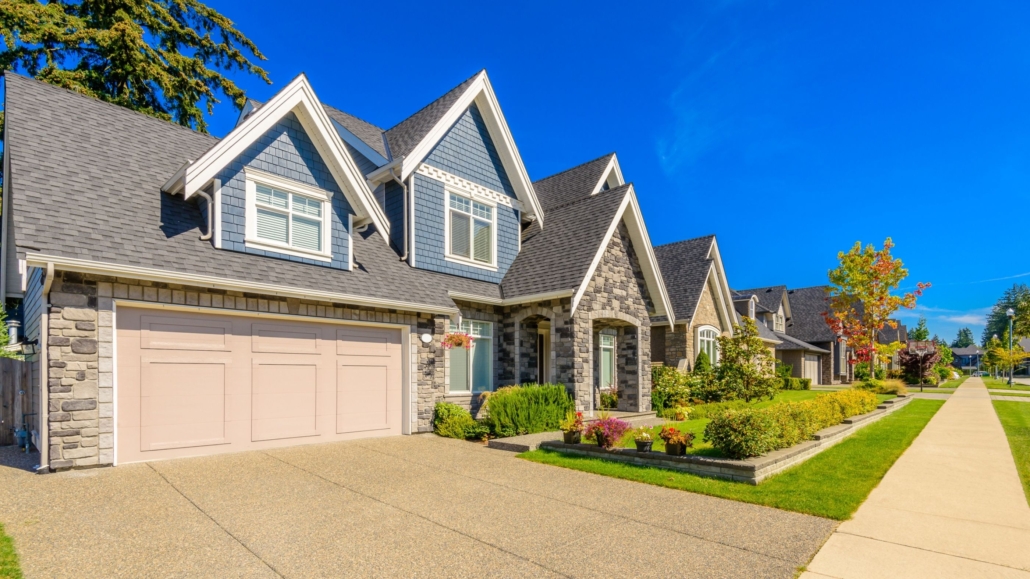


Thank God for bridge loans!
I say that because these loans have become a huge source of our business, given the expertise and reputation we’ve cultivated in the realm over the last few years.
Average Homebuyer Age Is up 17 Years From 2000!
This is why bridge loans are so popular now: The average homebuyer age is now 56, up from only 39 in the year 2000. This is of course of a result of the affordability crisis which is preventing younger homebuyers from purchasing. These older homebuyers invariably have existing homes, but they often want to buy a new home before they sell their current home.
HERE is an excellent Kobeissi Letter post about the ever-increasing average homebuyer age. The average age for first-time buyers is also way up and currently at 38 (it was below 30 for most of the 1980s and for a few years after 2008).
Bridge Loan Summary
While we currently have about 15 to 20 bridge loan options, depending on how you define “bridge loans,” I am going to do a broad summary of the various options because we are getting so many questions from agents.
1. Equity Line Against Current Property
This is the simplest, cheapest, and easiest solution as long as borrowers have enough time, income, and equity to qualify.
PROS:
- Inexpensive (usually no cost).
- No interest due until money is borrowed.
CONS:
- Borrowers can’t tell the lender that the purpose of the equity line is to buy a new home (lenders usually won’t want to offer the line if so).
- Time (it can take several weeks to get an equity line).
- Need to qualify (sufficient income, credit and equity).
2. Guaranteed Backup Offer – Eliminates Payments
We have several investors that guarantee they will buy a property if the seller cannot sell it on the open market in a sufficient amount of time. If a borrower pays for a guaranteed backup offer, lenders can then ignore the payments on the current home when qualifying a borrower to buy a new home (lending guidelines allow lenders to ignore payments for pending properties).
PROS:
- Inexpensive ($2,500 for properties under $1.3MM; $3,500 for properties $1.3MM and above).
- Fast (takes less than a week to process).
CONS:
- Costs money still.
- Have to pay even if the borrower does not end up buying a new home.
- No cash-out (buyer will still need to come up with down payment money).
3. Cash-Out Against Current Home/No Payments Due
We have several investors that will lend up to 75% of the value of the current (or “departing”) residence, but they will want as much as 2.4% of the sales price in exchange for that loan when the house sells.
PROS:
- No payments due – makes qualifying for a new loan easy and eliminates payment stress.
- Provides cash for a down payment if there is sufficient equity.
- Speed (can process in a few weeks).
- Still often cheaper than option 4, explained below.
CONS:
- Expensive (up to 2.4% of sales price when house sells).
- Requires ample equity to make the loan worth it.
4. Cross Collateral Single Loan Against Current and New Residence
This is the old-school bridge loan that numerous lenders offer. Lenders simply cross-collateralize both properties with one large loan that takes out the existing loan against the current/departing residence.
PROS:
- Simple and fast (can close in two weeks).
- No income verification is necessary in most cases.
CONS:
- Expensive (these loans typically cost a minimum of 2.5% in points on the combined loan amount, and rates are often around 9.99% annually).
5. Short-Term Loan Against New Property With Take-Out Plan
Borrowers can take up to a $3M loan amount with as little as 5% down and not need to worry about their debt-to-income ratio. Instead, they need to have a plan to pay off the loan in 6 months. Usually this entails selling a departing residence and paying off the loan in full, or doing a combination of sale proceeds and refinancing the bridge loan into a traditional loan product.
PROS:
- Simple and relatively fast (can close in 3 weeks).
- Little down payment (5%) needed from the borrower.
CONS:
- Expensive (costs a minimum of 2.5% of the purchase price of the new home in points).
- Buyer still has to make the payments on the other home until it sells.
- Need documented and viable take-out plan, as the loan is short-term.