

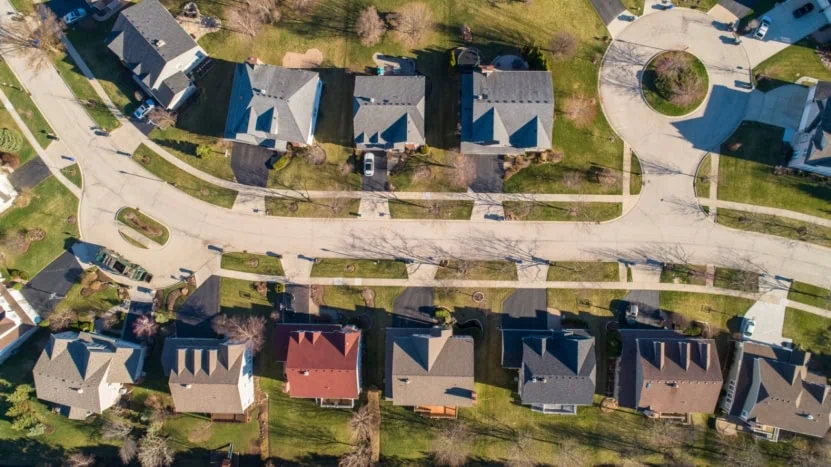
Owning a home in DuPage County means budgeting for one of the highest property tax burdens in the country. The good news: the system is more predictable than it looks once you understand how assessments, equalization factors, and local levies fit together. This guide walks through DuPage County property tax rates, 2026 due dates, exemptions you can claim, payment options, and how to appeal an assessment you believe is too high.
How DuPage County Property Taxes Work
Property taxes in DuPage County fund schools, fire and police services, libraries, parks, and county operations. Your annual bill is the combined product of three things: the assessed value of your property, the state equalization factor, and the levies set by every taxing body that covers your parcel.
Illinois assesses residential property at one-third (33.3%) of fair market value. The Illinois Department of Revenue then applies an equalization factor to keep values consistent across counties. After exemptions, the resulting Equalized Assessed Value (EAV) is multiplied by the composite tax rate of every taxing district that covers your address. That product is your tax bill.
Bills in Illinois are paid in arrears. Taxes assessed for the 2025 tax year are billed and paid in 2026.
DuPage County Property Tax Rate in 2026
The effective property tax rate in DuPage County averages roughly 1.95 to 2.2 percent of market value, depending on your municipality and the specific combination of taxing districts that apply to your parcel. That is below Cook County’s effective range of 2.0 to 2.5 percent, but well above the national average of about 1.0 percent.
On a $400,000 DuPage County home, that works out to roughly $7,800 to $8,800 per year before exemptions. Communities with higher local levies (often driven by school district funding needs) trend toward the upper end of the range. Newer subdivisions with special service area assessments can run higher still.
For the 2024 tax year (billed in 2025), the DuPage Treasurer reported total assessed values rising 9.2 percent county-wide, with the average tax rate falling 4.59 percent and average tax bills increasing 4.61 percent year over year. The total levy reached $3.61 billion across 321,773 bills.
DuPage County Property Tax Due Dates 2026
DuPage County property tax bills are paid in two installments each year. For the 2024 tax year (billed in 2025), installments were due June 2 and September 2, 2025.
For the 2025 tax year (billed in 2026), bills follow the same early-summer and early-fall cadence. The DuPage County Treasurer’s Office posts confirmed due dates each spring once levies and assessments are finalized. Always verify with the Treasurer before scheduling payment.
Key dates to track:
- First installment: Early June 2026 (date confirmed by Treasurer)
- Second installment: Early September 2026 (date confirmed by Treasurer)
- Bills mailed: Spring 2026, with electronic delivery available by request
- Senior Citizen Real Estate Tax Deferral enrollment deadline: Late February of the tax year
Not receiving a bill does not exempt you from the deadline. If your bill has not arrived by mid-May, look it up by parcel number on the DuPage County Treasurer’s online portal or call the office at 630-407-5900.
How Property Is Assessed in DuPage County
Township assessors evaluate each property based on fair market value, considering size, location, age, condition, and recent comparable sales. DuPage County operates on a four-year reassessment cycle. Properties are formally reviewed once during that period, with mid-cycle adjustments triggered by new construction, demolitions, or significant improvements.
After assessment, the value is equalized and reduced by any exemptions you qualify for. The result, the EAV, is what your tax rate is actually applied to.
Think your property tax bill is too high?
See your potential savings in under 2 minutes. No upfront cost.
DuPage County vs. Surrounding Illinois Counties
If you are weighing where to buy in the Chicago metro area, property tax cost is a meaningful piece of the math. Here is how DuPage stacks up against the surrounding counties.
| County | Effective Tax Rate (Avg.) | Reassessment Cycle | First Installment Due |
|---|---|---|---|
| DuPage | 1.95% – 2.2% | Every 4 years | Early June |
| Cook | 2.0% – 2.5% | Every 3 years | March (~April 1) |
| Lake | 2.4% (avg.) | Every 4 years | Early June |
| Will | 2.3% (avg.) | Every 4 years | Early June |
| Kane | 2.3% (avg.) | Every 4 years | Early June |
Rates and dates listed above are general averages drawn from county treasurer offices and the Illinois Department of Revenue. Your actual rate depends on the specific taxing districts that cover your address.
DuPage County Property Tax Exemptions
Most DuPage homeowners qualify for at least one exemption that lowers their EAV before the tax rate is applied. Missing an exemption you qualify for is one of the most common ways homeowners overpay.
General Homestead Exemption
Reduces EAV by up to $6,000 for owner-occupied primary residences. Once granted, it auto-renews each year as long as you continue to occupy the home as your primary residence.
Senior Citizen Homestead Exemption
Adds an additional $8,000 EAV reduction for homeowners age 65 and older. Stacks with the General Homestead Exemption.
Senior Citizen Assessment Freeze
For income-qualified seniors (currently below $65,000 household income), this freezes the EAV at a base year so future assessment increases do not raise your bill. Requires annual filing.
Senior Citizen Real Estate Tax Deferral
Allows qualifying seniors to defer up to $7,500 of property taxes per year. The State of Illinois places a lien on the property and charges 3 percent simple interest on the deferred amount, payable when the home is sold or transferred. Tax Year 2025 enrollment closed February 27, 2026.
Disabled Persons and Veterans Exemptions
Additional EAV reductions are available for disabled homeowners and for veterans with service-connected disabilities. The Veterans with Disabilities exemption can reduce EAV up to its full amount depending on disability rating.
Apply or check status through the DuPage County Supervisor of Assessments Office at 630-407-5858.
How to Pay Your DuPage County Property Tax Bill
DuPage County offers several payment channels:
- Online by electronic check or credit/debit card through the DuPage County Treasurer’s website
- By phone via the automated system at 855-795-3091
- By mail to the DuPage County Treasurer’s Office (postmark counts)
- In person at the Treasurer’s Office at 421 N. County Farm Road, Wheaton
- At participating local banks during the collection period
If your mortgage payment includes an escrow account, your loan servicer pays the bill directly from your escrow funds. You will still receive a bill in the mail for your records, but you do not need to make the payment yourself. Confirm with your servicer that the bill has been paid by the due date, especially in the year after closing on a new home.
Think your property tax bill is too high?
See your potential savings in under 2 minutes. No upfront cost.
What Happens If You Pay Late
Late property tax payments in DuPage County accrue 1.5 percent interest per month on the unpaid balance, starting the day after the installment due date. That works out to 18 percent annualized, so even a short delay adds up quickly.
Continued non-payment can lead to a tax sale, where the lien on your property is sold to a third-party investor. If the lien is not redeemed, it can complicate refinancing or, in extreme cases, lead to loss of the property. Setting calendar reminders for both installment dates is a simple way to avoid the problem entirely.
How to Appeal Your DuPage County Property Tax Assessment
If you believe your assessed value is too high relative to comparable homes, you have two appeal paths:
Step 1: Township Assessor Appeal
Start with your township assessor during the assessment notice period. This is the fastest, lowest-friction option. Bring evidence such as recent comparable sales, photos showing condition issues, or documentation of errors in your property record (square footage, bedroom count, lot size).
Step 2: DuPage County Board of Review
If the township assessor does not adjust your value, file a formal appeal with the Board of Review. The filing window is announced after assessment notices go out. The Board reviews evidence and issues a decision.
Step 3: Property Tax Appeal Board (PTAB) or Circuit Court
If you remain unsatisfied, you can appeal to the Illinois Property Tax Appeal Board or to circuit court. These paths take longer and often benefit from professional representation.
Successful appeals typically reduce assessed value by documenting comparable sales lower than your assessment or correcting errors in property characteristics. Even a small reduction in EAV can produce meaningful long-term savings, since the new value carries forward.
How DuPage Property Taxes Affect Your Monthly Mortgage Payment
Property taxes are usually collected as part of your monthly mortgage payment through an escrow account. Your loan servicer divides the annual tax bill by 12 and adds it to your principal, interest, and homeowners insurance payment. That total is your PITI.
On a $500,000 DuPage home, property taxes alone add roughly $800 to $920 per month to PITI. When budgeting for a home purchase here, factor in actual taxes for the specific address, not a statewide average. The same purchase price can carry a meaningfully different monthly payment depending on which DuPage municipality and school district you land in.
If your monthly payment came in higher than expected because of taxes, that does not automatically mean the loan structure is wrong. A higher escrow contribution today can prevent a shortfall and a mid-year payment jump later. The key is choosing a lender who explains the math clearly before you commit.
Frequently Asked Questions
Are DuPage County property taxes higher than Cook County?
Generally, no. DuPage’s average effective rate runs slightly below Cook County’s. However, specific municipalities within DuPage can exceed Cook averages depending on local school district levies. Compare specific addresses, not county averages, when evaluating a purchase.
How often does DuPage County reassess?
Every four years on a rotating cycle. Mid-cycle adjustments occur for new construction, additions, or significant improvements that change market value.
Can I prepay my property taxes?
Yes. DuPage allows prepayments by e-check, credit, or debit card through the Treasurer’s Office. Some homeowners prepay before year-end for tax planning purposes; consult a tax professional about whether prepayment benefits your specific situation.
What if I never received a bill?
Not receiving a bill does not waive the deadline. Look up your bill by parcel number on the Treasurer’s portal or call 630-407-5900. If your billing address is incorrect, contact the County Clerk at 630-407-5540 to update it.
Does refinancing affect my property taxes?
Refinancing does not change your assessed value or tax rate. It can change your escrow account if you switch lenders, since the new servicer will set up a fresh escrow analysis. Make sure your new loan accounts for upcoming installment dates so nothing falls through the cracks.
Buying or Refinancing in DuPage County?
Property taxes are one of the biggest line items in a DuPage homeowner’s monthly payment, so getting the numbers right before you buy or refinance matters. JVM Lending breaks down PITI for the exact address you are considering, including municipal-level tax variation, so you know what your real monthly payment will look like.
Ready to run your numbers? Contact JVM Lending today for a free rate quote.
You may be overpaying on your property taxes
Find out in 2 minutes if you qualify to lower your bill. No upfront fees. You only pay if you save.

*Average annual savings reported by Ownwell customers. Eligibility and savings vary.