

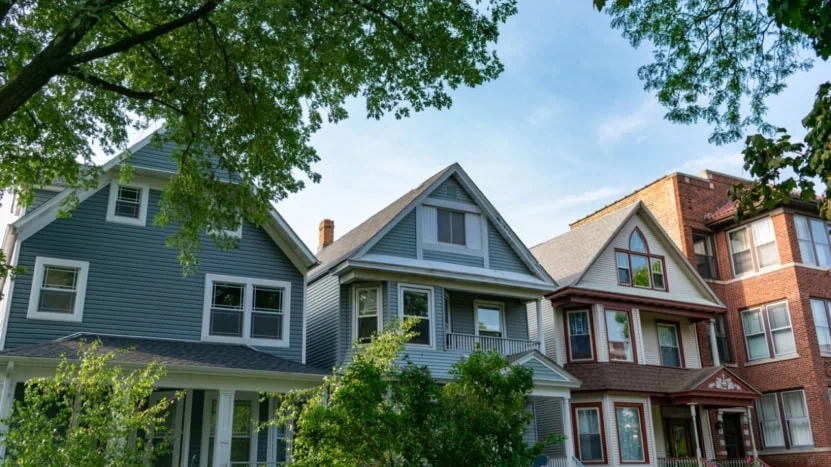
Whether you’re a first-time homeowner in Chicago or a long-time resident in Oak Park, understanding Cook County property taxes is essential. This guide covers the basics, from how taxes are calculated to the Cook County property tax due date, exemptions, and tools you can use to avoid overpayment.
What Exactly Are Property Taxes?
Property taxes are charges assessed on property owners by local government entities, such as counties, cities, or school districts. These county tax revenues fund schools, libraries, law enforcement, and infrastructure. In Cook County, property taxes are managed by multiple offices, including the Cook County Treasurer, Assessor, Clerk, and the Board of Review.
How Much Are Property Taxes in Cook County?
The total assessed value of your home is determined by the Cook County Assessor’s Office. Residential properties are assessed at 10% of fair market value, while commercial properties are assessed at 25%. The assessed value is then equalized by the state and multiplied by local tax rates.
Your tax bill may also reflect factors like building and lot size where applicable, exemptions applied, and any voter-approved levies.
How Cook County Property Taxes Are Calculated: A Step-by-Step Example
Understanding the math behind your tax bill removes a lot of confusion. Here is a concrete walkthrough using a typical Cook County residential property.
Step 1: Assessed Value
Cook County assesses residential properties at 10% of fair market value. A home with a fair market value of $350,000 would have an assessed value of $35,000.
Step 2: Apply the State Equalization Factor (Equalizer)
The Illinois Department of Revenue publishes an annual equalization factor for each county to bring assessed values in line with a uniform statewide standard. For Cook County, the 2024 equalization factor was approximately 2.9160. Multiplying the assessed value by this factor gives the Equalized Assessed Value (EAV).
$35,000 x 2.9160 = $102,060 (EAV)
Step 3: Apply Exemptions
Qualifying homeowners subtract their exemptions from the EAV before calculating the tax owed. In this example, the Homeowner Exemption reduces the EAV by $10,000.
$102,060 – $10,000 = $92,060 (taxable EAV)
Step 4: Apply the Composite Tax Rate
The composite tax rate is the combined levy rate for all taxing districts that apply to your parcel, including the state, county, school district, and municipality. Tax rates vary by township and location. Using a composite rate of 7.5% in this example:
$92,060 x 0.075 = $6,905 (estimated annual tax bill)
Note: The equalization factor changes annually and is published by the Illinois Department of Revenue. Verify the current factor before using this formula for your own estimate. Effective composite tax rates in Cook County typically range from 2% to 3.5% of market value depending on your township, but the calculation method above always applies.
2025-2026 Cook County Property Tax Calendar
Knowing the key dates in Cook County’s property tax cycle helps you avoid penalties, file exemptions on time, and plan your budget. The table below covers the major dates for the 2025 tax year (billed and paid in 2026).
| EVENT | DATE |
|---|---|
| Tax Year 2025 first installment bills mailed | By March 2, 2026 |
| First installment due (55% of prior year's bill) | April 1, 2026 |
| Tax Year 2025 exemption filing period opens | March 9, 2026 |
| Second installment due | Typically August-September 2026 (announced annually by the Treasurer's Office) |
| Cook County 3-year reassessment cycle | Residential properties reassessed on a rotating 3-year cycle by township |
The second installment due date is set each year by the Cook County Treasurer after assessments and rates are finalized. Check the Treasurer’s website for the confirmed 2026 second installment date as it becomes available. Not receiving a bill does not exempt you from these deadlines.
When Are Property Taxes Due in Cook County?
Property tax bills are issued in two installments each year:
- First Installment: Due March 1, equal to 55% of the prior year’s bill.
- Second Installment: Typically due in the summer or early fall, after assessments and rates are finalized. The exact Cook County property tax due date is announced annually by the Treasurer’s Office.
Timely tax payments are important, as late fees and interest accrue quickly.
Paying Your Property Tax Bill
You can pay property tax bills through the Cook County Treasurer’s online portal. Options include credit/debit card, e-check, or bank transfer.
The portal also allows you to:
- Search for potential refunds tied to overpayment associated with your property.
- Use a tool that identifies duplicate tax payments.
- Verify your tax bill mailing address.
- Review exemption information under exe (exemptions applied to your bill).
For more resources, visit the Cook County Treasurer’s website.
Think your property tax bill is too high?
See your potential savings in under 2 minutes. No upfront cost.
Understanding Your Cook County Property Tax Bill
Your tax bill itemizes charges from each taxing district. Review it carefully, particularly if you believe an error has occurred. Sometimes the bill may include incorrect charges, missed exemptions, or even duplicate tax payments.
If you suspect issues, the Cook County Clerk website provides access to recorded documents deeds and other official filings that can help clarify ownership and tax responsibility.
Chicago Property Tax: What City Homeowners Need to Know
Owning a home in the City of Chicago means navigating the same Cook County property tax system as the suburbs, but with a few city-specific layers that meaningfully affect your bill. Chicago property tax rates run higher than most Cook County suburbs in dollar terms because city homeowners pay into both citywide taxing bodies and county-level levies, and Chicago’s TIF districts redirect part of certain property tax revenue away from general services.
Chicago Property Tax Rate
The effective property tax rate in Chicago proper averages approximately 1.8 to 2.0 percent of market value, though specific rates vary by ward, school district, and TIF designation. On a $400,000 Chicago home, that translates to a tax bill in the range of $7,200 to $8,000 per year before exemptions.
Three points worth understanding:
- Chicago’s effective rate is generally lower than several Cook County suburbs. Higher-tax suburban towns (parts of Oak Park, Berwyn, and the South Suburbs) can run 2.5 to 3.5 percent.
- After the 2024 Chicago reassessment cycle and Board of Review appeals, the Cook County Assessor reported residential property’s share of the tax burden increased because commercial property won more than $3 billion in appeals. Many Chicago homeowners saw bills rise even when their assessed value did not change much.
- Chicago is reassessed every three years on a rotating cycle. The 2024 cycle covered Chicago; the 2025 cycle covered the northern suburbs; the 2026 cycle covers the southern and western suburbs.
How a Chicago Property Tax Bill Is Built
Your annual Chicago tax bill combines levies from several taxing bodies, all collected through one bill issued by the Cook County Treasurer:
| Taxing Body | What It Funds | Approximate Share of Bill |
|---|---|---|
| City of Chicago | City services, public safety, infrastructure | 20% – 25% |
| Chicago Public Schools (CPS) | Public education | 45% – 55% |
| Cook County government | Health system, courts, county services | 5% – 10% |
| Chicago Park District | Parks and recreation | 3% – 5% |
| Other (Forest Preserve, Water Reclamation, etc.) | Specialized districts | 5% – 10% |
Shares are illustrative and shift annually based on each body’s approved levy. The schools portion is consistently the largest single line.
TIF Districts: Why Two Identical Chicago Homes Can Have Different Bills
Chicago has more Tax Increment Financing (TIF) districts than any other city in the country. When a TIF district is created, property tax revenue above a baseline is diverted to fund redevelopment within that district rather than going to the general taxing bodies. The practical effect for homeowners: if your property sits inside a TIF district, your bill funds different services than a similar home a few blocks away outside the TIF.
TIFs do not change the assessed value of your home, and they do not raise your individual tax rate directly. They do influence the broader tax landscape because revenue captured in TIFs has to be made up elsewhere across the city’s overall levy. To see whether your address sits in a TIF district, check the City of Chicago’s TIF map or your most recent property tax bill, which lists the taxing districts that apply to your parcel.
Chicago Homeowner Exemptions
Chicago homeowners use the same exemptions as the rest of Cook County. The most important ones:
- Homeowner Exemption: Reduces EAV by $10,000, saving most Chicago homeowners $250 to $2,000 per year depending on local rates and assessment increases. Auto-renews. Tax Year 2025 filing deadline: May 15, 2026.
- Senior Citizen Homestead Exemption: Adds another $8,000 EAV reduction for homeowners 65 and older. Auto-renews.
- Senior Citizen Assessment Freeze: Locks the EAV at a base year for income-qualified seniors (2024 household income under $65,000). Requires annual filing. Often the highest-value exemption a Chicago senior can claim.
- Home Improvement Exemption: Lets you add up to $75,000 in improvements without a property tax increase for four years. Useful if you are renovating after purchase.
- Veterans with Disabilities Exemption: Reduces EAV based on disability rating, up to a full exemption for 70 percent or higher disability.
Important for new buyers: exemptions do not transfer with the property. If you buy a home from a previous owner who had the Homeowner Exemption applied, you must reapply once you take occupancy. Missing this is one of the most common reasons new Chicago homeowners overpay in their first full year.
When Are Chicago Property Taxes Due?
Chicago property taxes are paid in two installments through the Cook County Treasurer:
- First Installment: Due March 1 (with grace period typically extending to early April). Equal to 55 percent of the prior year’s total bill.
- Second Installment: Typically due in late summer or early fall, after assessments and rates are finalized. The exact date is announced annually by the Treasurer’s Office.
Most Chicago homeowners pay through their mortgage escrow account. If your property taxes are not escrowed, set calendar reminders. Late payments accrue 1.5 percent interest per month, and continued non-payment can lead to a tax sale.
How to Appeal Your Chicago Property Tax Assessment
Chicago homeowners have two appeal paths, both administered through Cook County:
- First, appeal directly with the Cook County Assessor’s Office during your township’s reassessment window. Chicago is reassessed on a triennial cycle by region (North Side, South Side, West Side rotating).
- Second, appeal with the Cook County Board of Review after the Assessor’s values are finalized. This is a separate filing window and is where many successful reductions actually occur.
If both Cook County paths produce no relief and you believe your assessment is materially out of line, you can continue to the Illinois Property Tax Appeal Board (PTAB) or to circuit court. Successful appeals typically rely on comparable sales evidence, errors in the property record, or condition issues not reflected in the assessor’s data.
Chicago Property Tax vs. Cook County Suburbs
Buyers weighing Chicago against suburban Cook County often assume the city has dramatically higher property taxes. The reality is more nuanced:
| Area | Effective Rate (Approx.) | Notes |
|---|---|---|
| Chicago (city proper) | 1.8% – 2.0% | Higher home values, lower per-dollar rate than many suburbs |
| North Shore suburbs (Evanston, Wilmette) | 2.0% – 2.8% | High-quality school districts, premium pricing |
| West suburbs (Oak Park, Berwyn) | 2.5% – 3.5% | Among the highest effective rates in the metro |
| South Suburbs | 2.5% – 4.0%+ | Lowest home values, highest effective rates due to declining tax base |
The takeaway: Chicago itself does not always have the highest effective rate. Several Cook County suburbs run materially higher. Compare specific addresses, not regional averages, when running purchase math.
Reducing Your Tax Bill Through Exemptions
One of the most effective ways to reduce your tax bill is by applying for exemptions. The table below shows the specific EAV reductions, estimated annual savings, and renewal requirements for each available exemption.
Source: Cook County Assessor’s Office exemptions page. Approximate annual savings are based on the Assessor’s reported averages and will vary by property location and local tax rate. The filing period for Tax Year 2025 exemptions opened March 9, 2026.
| EXEMPTION | EAV REDUCTION | APPROX. ANNUAL SAVINGS | AUTO-RENEWS? |
|---|---|---|---|
| Homeowner Exemption | $10,000 | ~$950/year | Yes |
| Senior Citizen Exemption (65+) | $8,000 | ~$760/year | Yes |
| Senior Freeze (income under $65,000) | Freezes EAV at base year | Varies (can be significant) | No (annual filing required) |
| Disabled Person Exemption | $2,000 | ~$190/year | Yes (per new legislation) |
| Returning Veterans Exemption | $5,000 | ~$475/year | No (annual filing required) |
| Veterans with Disabilities | Up to full EAV | Varies by disability rating | No (annual filing required) |
Missing an exemption you qualify for is common and can result in a significantly higher bill. Apply through the Cook County Assessor’s Office. The 2025 tax year exemption filing period opened March 9, 2026.
How to Appeal Your Cook County Property Tax Assessment
If you believe your property’s assessed value is higher than it should be, you have the right to appeal. This is one of the most effective ways to reduce your property tax bill, and Cook County provides two separate paths to do it.
Path 1: Appeal Through the Cook County Assessor’s Office
The first opportunity to appeal is directly with the Cook County Assessor’s Office during your township’s reassessment window. Cook County reassesses residential properties on a rotating 3-year cycle by township, so your window to file with the Assessor depends on when your township is up for reassessment. Appeal deadlines are set by township and change each cycle. Check the current township appeal calendar at cookcountyassessor.com to find your deadline.
You can file your appeal online through the Assessor’s portal at cookcountyassessor.com.
Path 2: Appeal Through the Cook County Board of Review
After the Assessor’s values are published, you have a second opportunity to appeal through the Cook County Board of Review. This option is available whether or not you previously filed with the Assessor. The Board of Review operates on its own township-by-township schedule, so deadlines again vary by location.
What Evidence to Prepare
A strong appeal is built on documented evidence. The most commonly used and accepted forms include:
- Comparable sales data: Recent sales of similar properties in your neighborhood that indicate a lower market value than what your assessment implies.
- A recent independent appraisal: A licensed appraiser’s opinion of value can carry significant weight, particularly for higher-value properties.
- Photos documenting property condition issues: Evidence of deferred maintenance, structural issues, or other factors that negatively affect value.
- Your property record card: Review the card for errors in basic facts such as square footage, lot size, number of rooms, or property classification. Factual errors are among the easiest grounds for a successful appeal.
You can access your property record card and file appeals online through the Assessor’s portal at cookcountyassessor.com.
Cook County Tax Appeals
If you believe your property’s assessed value is too high, you may file an appeal. The Board of Review and the Assessor’s Office both accept appeals, but be mindful of tax appeal deadlines. Late filings will not be considered.
Once your appeal is filed, the Board reviews evidence and determines whether an adjustment is warranted. Their acceptance of tax appeals can lead to lower assessments and reduced property tax bills.
Think your property tax bill is too high?
See your potential savings in under 2 minutes. No upfront cost.
Frequently Asked Questions
When are Cook County property taxes due?
Cook County property taxes are paid in two installments. For Tax Year 2025, the first installment (equal to 55% of the prior year’s bill) is due April 1, 2026. The second installment is typically due in August or September and is announced annually by the Cook County Treasurer’s Office after assessments and rates are finalized. Not receiving a bill does not exempt you from these deadlines.
How are Cook County property taxes calculated?
Residential properties in Cook County are assessed at 10% of fair market value. That assessed value is then multiplied by the state equalization factor (published annually by the Illinois Department of Revenue) to produce the Equalized Assessed Value (EAV). Applicable exemptions are subtracted from the EAV, and the result is multiplied by the composite tax rate for your taxing districts to produce your annual tax bill. For a step-by-step example, see the calculation section above.
What exemptions are available for Cook County homeowners?
Cook County offers several exemptions that reduce your taxable EAV. The Homeowner Exemption reduces EAV by $10,000 (saving roughly $950 per year) and auto-renews. The Senior Citizen Exemption (age 65 and older) reduces EAV by an additional $8,000 (saving roughly $760 per year). The Senior Freeze locks your EAV at a base year if your household income is under $65,000, and requires annual filing. Other exemptions include the Disabled Person Exemption, the Returning Veterans Exemption, and the Veterans with Disabilities Exemption, which can reduce EAV up to its full amount depending on disability rating. Apply through the Cook County Assessor’s Office. The 2025 tax year filing period opened March 9, 2026.
How do I appeal my Cook County property tax assessment?
You have two options. First, you can appeal through the Cook County Assessor’s Office during your township’s reassessment window. Second, you can appeal through the Cook County Board of Review after the Assessor’s values are published. Both paths accept online filings. Deadlines vary by township, so check the current appeal calendar at cookcountyassessor.com. Strong appeals typically include comparable sales data, a recent appraisal, photos of property condition issues, and a review of your property record card for factual errors.
How often are Cook County properties reassessed?
Cook County reassesses residential properties on a rotating 3-year cycle by township. This means your property is not reassessed every year. Check the Cook County Assessor’s reassessment schedule to find out when your township is next up for reassessment, as this determines when your primary window to appeal with the Assessor opens.
What is the property tax rate in Cook County?
For the 2025-2026 assessment year, effective property tax rates in Cook County vary widely, typically ranging from 2.0% to 3.5% of market value depending on your township and the taxing districts that apply to your parcel. Your specific rate depends on your property’s location. Use the Cook County Assessor’s online property lookup tool or contact the Assessor’s Office to find the exact rate for your address.
What happens if I miss a Cook County property tax payment?
Late payments are subject to a penalty of 1.5% per month on the unpaid balance. Continued nonpayment can result in a tax lien on your property, and in cases of prolonged delinquency the county may initiate a tax sale or other collection proceedings. Paying on time, or confirming that your lender is paying through your escrow account, is the best way to avoid these consequences.
Can I pay Cook County property taxes online?
Yes. Cook County accepts online property tax payments through the Treasurer’s portal. Payment options include e-check, credit card, and debit card. A convenience fee may apply to card payments. Keep your confirmation number after completing any online payment.
Will my mortgage lender pay my Cook County property taxes?
If your mortgage includes an escrow account, your lender pays your property taxes on your behalf. Because Cook County’s second installment due date varies each year, confirm the expected bill date with your lender so your escrow account is adequately funded.
What is the property tax rate in Chicago?
The effective property tax rate in Chicago proper averages approximately 1.8 to 2.0 percent of market value. On a $400,000 Chicago home, that produces a tax bill of roughly $7,200 to $8,000 per year before exemptions. Specific rates vary by ward, school district, and TIF designation.
Are Chicago property taxes higher than the suburbs?
Not always. Chicago\u2019s effective property tax rate (1.8 to 2.0 percent) is generally lower than several Cook County suburbs. Oak Park, Berwyn, and many South Suburbs run 2.5 to 3.5 percent or higher. Compare specific addresses rather than regional averages when evaluating a purchase.
When is the Chicago Homeowner Exemption deadline?
The Tax Year 2025 Homeowner Exemption filing deadline is Friday, May 15, 2026. Exemptions appear on the second installment property tax bill. The Cook County Assessor\u2019s Office auto-renews the Homeowner Exemption for properties that did not change ownership in the prior year. New buyers must reapply after taking occupancy.
How JVM Can Help
Property taxes are one of the largest ongoing costs of homeownership in Cook County, with effective rates ranging from 2% to 3.5% of market value depending on your township. Understanding how your bill is calculated, which exemptions you qualify for, and when to file an appeal can save you hundreds or thousands of dollars each year.
Buying a home in Cook County? Contact JVM Lending for a free pre-approval and let us help you plan for the full cost of homeownership. Our team specializes in helping Illinois homebuyers and homeowners from Chicago to Evanston, Cicero, Oak Park, and beyond.
Contact us today at (855) 855-4491 or email hello@jvmlending.com to learn how we can support your homeownership journey in Cook County.
You may be overpaying on your property taxes
Find out in 2 minutes if you qualify to lower your bill. No upfront fees. You only pay if you save.

*Average annual savings reported by Ownwell customers. Eligibility and savings vary.
Please Note: The information provided in this blog post is intended for informational and educational purposes only. JVM Lending is not a tax professional or financial advisor. Property tax laws and regulations can be complex and may vary by location and individual circumstances. We strongly recommend consulting with certified tax professionals for personalized advice. If you’d like a referral, we’ll happily connect you with one of the trusted professionals in our network.