

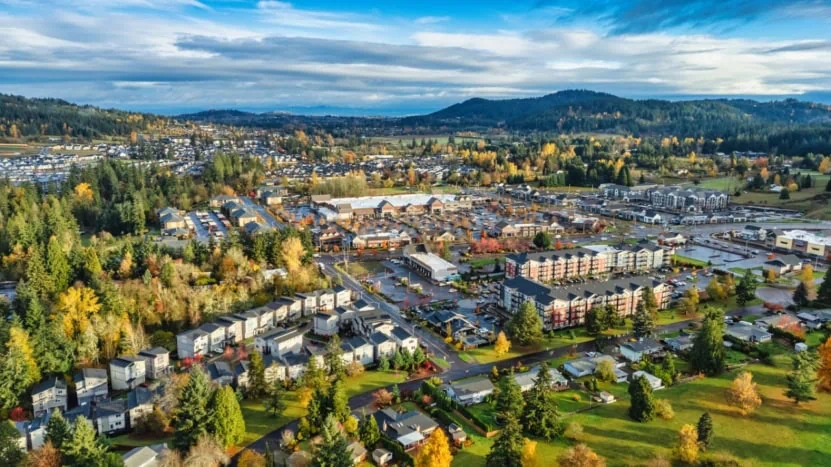
Salem’s real estate market continues to reflect broader economic forces, including mortgage rates, job growth, and buyer demand. In 2026, expectations point to steady buyer interest, modest home price appreciation, and a continued, gradual improvement in available inventory. With more listings than the tightest years of the cycle, the market is expected to feel more balanced, especially for buyers who are prepared and realistic about timing and neighborhood tradeoffs.
Economic Factors Shaping the Market
Several economic indicators are expected to influence Salem’s housing market in 2026. Inflation is projected to remain relatively contained, which helps reduce pressure on household budgets and supports more predictable borrowing conditions. Mortgage rates are expected to remain in the mid-6% range for much of the year, with typical week-to-week volatility that can affect monthly payment planning.
Job growth in Salem is expected to remain steady, supported by government services, healthcare, education, and regional manufacturing. Employment gains are likely to be moderate, which typically supports housing demand without driving major price spikes. Salem also continues to benefit from relocation interest, especially from higher-cost West Coast markets, although the pace of inbound moves is expected to be more measured than during peak migration years.
Consumer confidence is expected to remain steady. Buyers are likely to be selective, and many will prioritize payment stability, commute time, and school zones. Sellers should expect buyers to ask more questions, request repairs more often, and compare options carefully.
Housing Inventory Outlook in Salem, OR
Inventory is expected to keep improving in 2026, although progress may be gradual. Salem is likely to operate in a range closer to balanced than in prior years, especially as more homeowners list and buyers become more price-sensitive.
Supply may hover around the mid-4-month range in many parts of the metro area. That is still below the traditional buyer market threshold, but it is enough to give buyers more options and reduce rushed decisions.
New construction is expected to remain active in pockets of the region, especially where development is already underway, and infrastructure can support growth. Townhomes, duplexes, and smaller footprint homes may take priority as builders respond to affordability constraints. Continued infill and higher-density projects near key corridors are also expected to add incremental supply over time.
As mortgage rates remain relatively stable, some buyers who paused due to affordability may re-enter the market. At the same time, buyers are more likely to focus on value, which can help keep competition in check.
A Balanced Market for Buyers and Sellers
Salem’s housing market in 2026 is expected to reward preparation and realism. Buyers may have more choices than in the tightest years, along with more room to negotiate on price, repairs, and closing terms. Sellers can still benefit from long-term appreciation, but pricing accurately and presenting the home well will matter more than ever.
Well-maintained homes in desirable areas may still move quickly. Homes that are overpriced, need major repairs, or are in less convenient locations may take longer and require more adjustments.
View mortgage rates for October 27, 2026
Financing Options and Affordability in Salem
Mortgage rates remain one of the biggest factors shaping affordability in 2026. Buyers also have a wide range of financing options depending on their goals, credit profile, and property type. Understanding loan choices and assistance programs can make a meaningful difference in both monthly payment and cash needed at closing.
First-time homebuyers often explore FHA financing for the low down payment requirement. USDA loans may also be an option for eligible suburban or rural areas outside core neighborhoods. State-supported down payment assistance programs may help qualified borrowers reduce upfront costs. Many buyers also benefit from counseling programs that clarify budgeting, credit readiness, and purchase planning.
Repeat and move up buyers may use conventional financing and existing equity to reduce the new loan amount. Buyers targeting higher-priced homes may consider jumbo options if needed. Some homeowners also evaluate cash-out refinance strategies, although this depends heavily on rates and long-term plans.
Investment buyers often use conventional or portfolio-style programs designed for rentals and small multi-unit properties. These loans usually require higher down payments and stronger documentation. Investors typically focus on financing that supports cash flow, reserves, and long-term flexibility.
Working with a knowledgeable mortgage team helps align the loan structure with the buyer’s timeline and risk tolerance.
Contact JVM Lending today to get started on your home financing journey.
Regional Market Differences
Salem’s market varies by neighborhood. Price points, inventory, and competition can vary significantly by location, home age, and school zones.
- East Salem is expected to remain in high demand. Median prices may trend in the mid $400,000s, with inventory often tighter than the metro average due to consistent family demand.
- West Salem may continue to appeal to buyers who want a suburban feel. Prices may range from the low to mid $400,000s, with slightly more supply in some pockets depending on new-construction activity.
- South Salem often commands higher prices due to its neighborhood character and proximity to amenities. Median prices may trend in the upper $400,000s, with competition strongest for move-in-ready homes.
- Keizer and Turner may continue to offer relative affordability. Median prices may trend from the upper $300,000s into the low $400,000s, with inventory typically a bit higher, which can benefit first-time buyers and investors.
These are broad expectations, and street-by-street differences can be significant, especially for condition, lot size, and access to major routes.
Rental Market and Investment Outlook
Salem’s rental market is expected to remain steady in 2026, supported by ongoing affordability challenges for homeownership and consistent household formation. Rent growth is expected to be modest, and occupancy is likely to remain healthy, particularly for well-located properties near employment, schools, and major corridors.
Investors may continue to focus on long-term rentals and small multi-family properties where demand tends to be stable. Returns depend heavily on purchase price discipline, property condition, and insurance and maintenance planning. Short-term rental performance may remain mixed, particularly where rules and licensing limit expansion.
Frequently Asked Questions
Will Salem home prices drop in 2026?
A significant drop is unlikely. Most expectations point to stable pricing with modest appreciation, especially for well-maintained homes in desirable areas.
Are loan limits still important in Salem?
Loan limits matter for FHA and conventional financing and can influence down payment and loan program eligibility. Buyers should confirm current limits based on property type and location.
Is 2026 a good time to buy in Salem?
It can be, especially for buyers who value selection and negotiation. With inventory expected to remain improved versus the tightest years, buyers may have more options and less pressure.
Which Salem areas offer the best value?
Keizer and Turner often provide more affordability. South Salem and parts of East Salem offer strong amenities but typically come with higher price points.
What factors most influence Salem’s housing market?
Mortgage rates, local job stability, housing supply, construction activity, policy changes, and migration trends all play key roles.
Ready To Jump Into the Salem Market?
Navigating Salem’s real estate market in 2026 requires clear goals and solid financing. Whether you’re buying, refinancing, or investing, understanding current conditions can help you make smarter decisions and avoid surprises.
JVM Lending’s team is here to support you every step of the way, from planning to pre approval to closing. Reach out when you’re ready to explore your options and move forward with confidence in the heart of Oregon.