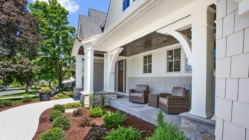


Vallejo sits at the northern edge of San Pablo Bay, about 30 miles from downtown San Francisco, with four zip codes, a daily passenger ferry, and housing stock that runs from 1890s Victorians near the waterfront to golf course homes built in the early 2000s. Living in Vallejo, CA means Solano County property tax bills, Vallejo City Unified schools, and for most buyers, a loan amount that stays comfortably inside both the conforming and FHA limits.
That last part shapes the whole search. This guide covers where the city actually sits, what each zip code covers, what homes cost, how people get to work, and what the financing looks like at Vallejo price points.
Where Is Vallejo, California?
Vallejo occupies the southwestern corner of Solano County, on the northeast shore of San Pablo Bay where the Napa River becomes the Mare Island Strait. It is the largest city in Solano County and sits in the North Bay portion of the nine-county San Francisco Bay Area.
American Canyon and the Napa Valley are directly north. Benicia is east across I-780. The Carquinez Strait forms the southern edge, and open water sits to the west. The city covers roughly 30 square miles of land, with another 19 square miles of water inside its boundaries.
Four routes carry most of the traffic. Interstate 80 runs through the city on the way from the East Bay toward Sacramento. Interstate 780 connects east to Benicia and I-680. State Route 37 runs west toward Marin and Sonoma counties. State Route 29 heads north into the Napa Valley.
Rough driving distances give you the picture: about 30 miles to downtown San Francisco, roughly 25 miles to Oakland, and about 50 miles to Sacramento.
What County Is Vallejo In?
Vallejo is in Solano County. This matters more than most buyers expect.
County lines determine your property tax bill, your transfer tax, your recording fees, and your assessor. They also determine your loan limits, since both FHFA and HUD set those at the county or metro level. Vallejo anchors the Vallejo-Fairfield metropolitan area, and every Solano County city shares the same 2026 conforming loan limits and FHA loan limits.
One address trap is worth knowing. Some homes with a Vallejo mailing address carry the 94503 zip code, which is American Canyon in Napa County. Different county, different assessor, different school district. Confirm the county on any specific property before you assume anything about taxes or schools.
Vallejo Zip Codes and What They Cover
The city has four standard zip codes assigned by the USPS.
| Zip Code | General Area |
|---|---|
| 94589 | North Vallejo |
| 94590 | Central and west Vallejo, downtown, the waterfront |
| 94591 | East and southeast Vallejo |
| 94592 | Mare Island |
Zip boundaries and city limits are not the same thing, and neither one lines up neatly with school attendance areas. Use the zip code to orient yourself, then verify the specifics on the actual address you are considering.
The Neighborhoods Buyers Ask About
The neighborhood you pick will shape your experience of the city more than any other decision, and it will also shape your loan. Vallejo’s housing stock spans more than a century, and the financing that fits a 2004 golf course home is not the financing that fits an 1892 Victorian.
Hiddenbrooke sits in the northern hills off I-80 at the American Canyon Road interchange. It is a master-planned community of roughly 1,200 homes wrapped around an Arnold Palmer-designed golf course, with about 700 acres of permanent open space. Zillow’s neighborhood home values put it around $805,000, the highest in the city. The Hiddenbrooke Property Owners Association manages the community, and several subdivisions inside it run their own smaller associations on top of that. Both sets of dues count against your debt-to-income ratio, so pull the actual figures before you set a budget.
Glen Cove occupies the southeastern edge near the Carquinez Strait, with mostly detached single-family homes built from the 1970s onward and Zillow values around $600,000. It is a steady, established part of the city and one of the more consistently searched neighborhoods.
Mare Island is the former naval shipyard across the strait, decommissioned in the 1990s and slowly redeveloping since. The residential side includes a historic officers’ housing district and newer construction, with Zillow values around $735,000. Historic and converted properties here can require extra underwriting attention, especially where a property is part of a condominium or planned development. It is worth confirming the project type early.
Downtown and the waterfront hold the oldest housing in the city, including Victorians and early-century bungalows near the ferry terminal. Prices run lower here than anywhere else in Vallejo, and a meaningful share of the inventory needs work. Renovation financing is the tool that fits. An FHA 203(k), a Fannie Mae HomeStyle, or a Freddie Mac CHOICERenovation loan lets you roll the repair budget into the purchase loan and close on the finished value rather than paying for the work separately afterward. On a 120-year-old house with original systems, that difference decides whether the deal pencils.
North and South Vallejo cover most of the remaining inventory, largely postwar and mid-century single-family homes. Zillow values in the older central and southern pockets run in the $450,000 to $490,000 range.
Want a more detailed breakdown of each area? Explore our Vallejo neighborhoods guide before narrowing down your home search.
What Homes Cost in Vallejo
Here is the sourced picture of the city as of the most recent data.
| Measure | Vallejo | Source |
|---|---|---|
| Median value, owner-occupied homes | $597,100 | U.S. Census Bureau, ACS 2020-2024 |
| Median household income | $90,171 | U.S. Census Bureau, ACS 2024 |
| Homeownership rate | 57.4% | U.S. Census Bureau, ACS 2024 |
| Mean travel time to work | 30 minutes | U.S. Census Bureau, ACS 2020-2024 |
| Population | About 122,700 | 2026 estimate; 125,939 at the 2020 Census |
Those figures describe the city as a whole, and the cost of living in Vallejo tracks them closely enough for planning. Median sale prices move faster than Census estimates and have run in the low $500,000s in recent monthly reporting, with the spread between neighborhoods wide enough that the citywide number tells you less than the zip-level number. Ask for both when you start looking.
On property taxes, California’s Proposition 13 sets the base rate at 1% of assessed value, with assessed value generally reset to your purchase price when you buy. Voter-approved bonds and direct assessments get added on top, which is why the effective rate on a Solano County bill lands above 1%. Newer master-planned areas can also carry community facilities district assessments. Pull the actual tax bill for any property you are serious about rather than working from a citywide average.
If you’re ready to start looking, check out our guide to homes for sale in Vallejo, CA to see what buyers can expect in today’s market.
What Is Actually for Sale
Detached single-family homes make up the bulk of the market, but Vallejo has more variety than a city this size usually carries, and each type changes the loan.
Condominiums show up in meaningful numbers, concentrated near the waterfront and in the redeveloped sections of Mare Island. Condo financing gets underwritten twice, once on you and once on the building. Owner-occupancy ratios, the reserve balance, the share of units held by a single entity, and any pending litigation all factor into whether a project is warrantable. That review should happen early. A project that falls outside standard guidelines can still be financed, usually through a portfolio product with different terms.
Two-to-four unit properties are the other category worth flagging. The county loan limits for those run well above the single-family figures, an owner-occupant can buy one with a low down payment, and qualifying income can include a portion of the rent from the other units. Vallejo has real inventory here, most of it in the older central and southern neighborhoods.
For more information on financing multi-unit properties, read our guide to Buying a Duplex in Vallejo.
Townhomes and planned developments sit between the two. They usually finance like single-family homes, though the HOA dues still count in your ratios.
Loan Limits and Down Payments at Vallejo Prices
Solano County is a baseline conforming county for 2026, and its FHA limit sits below its conforming limit. That gap matters once you move into the higher-priced neighborhoods.
| Loan Type | 2026 Solano County Limit, 1-Unit | Typical Minimum Down Payment |
|---|---|---|
| Conforming (Fannie Mae / Freddie Mac) | $832,750 | 3% for eligible first-time buyers, 5% otherwise |
| FHA | $685,400 | 3.5% |
| Above those amounts | Jumbo financing | Varies by program |
Both ceilings sit above the city’s median value, so the large majority of Vallejo purchases get financed with a conventional or FHA loan rather than a jumbo. Two-to-four unit properties carry higher limits than the single-family figures above, which is one reason duplexes here draw steady interest from owner-occupants.
The practical read for most buyers: a home priced near the citywide median leaves room under the FHA ceiling, and a home in Hiddenbrooke or on Mare Island can clear the FHA limit while still landing well inside conforming territory. Which program fits comes down to your credit profile, your down payment, and how the mortgage insurance math works out on each side.
VA financing is used widely across Vallejo, since much of its growth surrounded the Mare Island Naval Shipyard, and the city still has a substantial veteran population as a result. A VA loan requires no down payment and no monthly mortgage insurance, and its county entitlement calculation follows the same conforming figure above. For an eligible buyer at Vallejo price points, it is frequently the strongest option on the table.
One point that gets lost in rate-watching. A higher rate is not automatically the wrong outcome if it comes with a structure that lowers what you actually pay each month. A temporary buydown reduces your payment in the early years, and a lender credit can offset closing costs in exchange for a slightly different rate. The monthly number and the total cost over the years you plan to own are what deserve the attention.
Getting to Work: Ferry, Freeway, and Bus
Vallejo’s transit story starts at the water. San Francisco Bay Ferry runs daily service from the terminal at 289 Mare Island Way to downtown San Francisco, a crossing of roughly 60 minutes, with select trips serving Mare Island. For anyone working near the Embarcadero or the Financial District, that ride replaces a freeway commute entirely.
SolTrans operates the local and regional bus network, including express service that connects Vallejo riders toward BART and the broader regional system. Amtrak Thruway motorcoach service also stops at the Vallejo Transit Center.
Most residents still drive. The mean travel time to work is about 30 minutes according to Census data, and I-80 westbound in the morning is the pressure point. If your job sits in the East Bay, that number is realistic. If your job sits in San Francisco and you can use the ferry, the trade you are making is a longer scheduled trip in exchange for one you do not have to steer.
Schools in Vallejo
Vallejo City Unified School District serves the city and operates elementary, middle, and high schools across all four zip codes. Charter and private options operate here as well, and Solano Community College’s Vallejo campus and Touro University California both sit inside the city.
Attendance boundaries do not follow zip codes or neighborhood names, and they change. Verify the assigned schools for a specific address directly with the district before you make an offer, especially if school assignment is driving your neighborhood choice.
If schools are an important part of your decision, our Vallejo schools guide breaks down the public, charter, and higher education options available throughout the city.
Safety and What the Numbers Actually Say
Safety is the single most-searched question about Vallejo, and it deserves a straight answer rather than a dodge in either direction.
Citywide crime statistics blend neighborhoods that look nothing alike. The rate in a hillside subdivision and the rate a few miles away near the older commercial corridors are different numbers averaged into one figure, and that average will not tell you what a specific block feels like. Two things produce a more accurate read than a citywide average: visiting the specific street at different hours, and pulling reported incident data at the neighborhood level. Neighborhood-level incident data is published, and it varies enough block to block to be worth the hour it takes to read.
Things to Do in Vallejo
- Six Flags Discovery Kingdom, a combined theme park, marine park, and zoo on the north side of the city near Lake Chabot.
- Lake Chabot and Dan Foley Park, a man-made lake dating to 1871 with adjacent park land, trails, and open space.
- Mare Island, where the historic shipyard district, the Mare Island Preserve, and a growing set of restaurants and taprooms occupy the former naval base.
- The waterfront and ferry building area, with promenade walking, the farmers market, and views back across the strait.
- Wine country access, since State Route 29 puts the southern end of the Napa Valley within a short drive.
Want a deeper look at crime trends and neighborhood-level safety data? Read our guide on whether Vallejo is safe before choosing where to buy.
Is Vallejo a Good Place to Live?
That depends entirely on what matters most to you about your home’s location.
Living in Vallejo tends to work well for ferry commuters who want to trade a steering wheel for a seat, first-time buyers who need a Bay Area entry point where FHA and low-down-payment conventional loans still reach the median price, buyers who want older homes with real character and are open to renovation financing, and small investors looking at two-to-four unit properties in a market where those limits leave room to work.
Neighborhood variation is wide, which means potential homebuyers need to spend more time researching the area around where they are looking to buy a home. A large share of the housing stock is older and will show its age in the inspection. The commute is a genuine factor unless you are remote or hybrid. And the market is uneven enough that you want current, neighborhood-level data rather than a citywide headline.
Frequently Asked Questions
What county is Vallejo, CA in?
Vallejo is in Solano County, and it is the county’s largest city. It sits in the North Bay portion of the San Francisco Bay Area and anchors the Vallejo-Fairfield metropolitan area, which is the geography used to set FHA loan limits.
What are the zip codes for Vallejo, California?
Vallejo has four standard zip codes: 94589 covering the north side, 94590 covering central and west Vallejo including downtown and the waterfront, 94591 covering the east and southeast, and 94592 covering Mare Island.
Is Vallejo part of the Bay Area?
Yes. Vallejo is part of the nine-county San Francisco Bay Area and sits in its North Bay region, on the northeast shore of San Pablo Bay.
How far is Vallejo from San Francisco?
Vallejo is roughly 30 miles from downtown San Francisco by road. The San Francisco Bay Ferry crossing between the Vallejo terminal and downtown San Francisco takes about 60 minutes.
What are the 2026 loan limits in Vallejo?
Vallejo follows Solano County limits. The 2026 conforming limit is $832,750 for a one-unit property, and the FHA limit is $685,400 for a one-unit property. Two-to-four unit properties carry higher limits under both programs.
The Bottom Line on Living in Vallejo
Vallejo gives buyers water access, ferry service to San Francisco, a wide range of housing eras and price points, and loan limits that sit above the local median value. Knowing your actual purchasing power is what turns a research phase into a real home search.
Thinking about buying in Vallejo? Contact JVM Lending today for a free, no-obligation pre-approval.
See what you can afford in Fresno before you start your search.More Space, More Sun, More Home for Your Budget

Sources
- U.S. Census Bureau, American Community Survey (population, income, home value, homeownership, commute time)
- Federal Housing Finance Agency, 2026 Conforming Loan Limit Values
- U.S. Department of Housing and Urban Development, 2026 FHA Loan Limits
- San Francisco Bay Ferry, Vallejo route information
- Zillow neighborhood home values, mid-2026
- Vallejo City Unified School District