

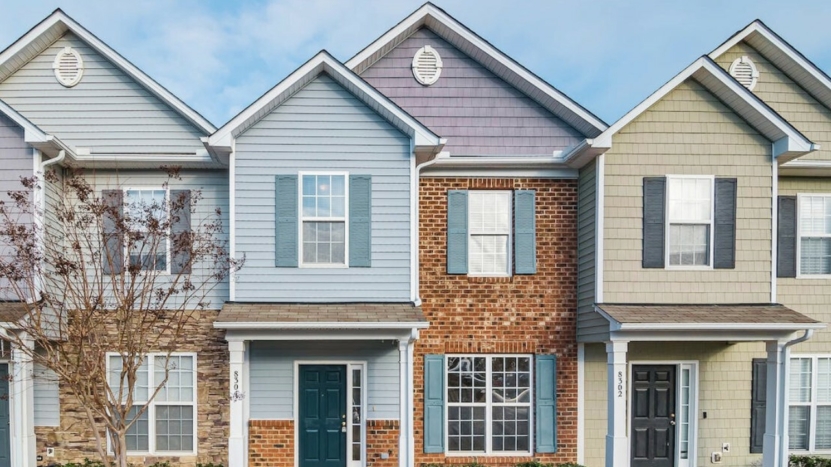
Houston property taxes are calculated by multiplying your home’s appraised value, set each year by the Harris Central Appraisal District, by the combined tax rate of every taxing authority that covers your address. Effective rates typically land between 1.8 and 2.0 percent or more of market value. The homestead exemption and other reductions can meaningfully lower what you owe if you apply on time.
This guide covers how your bill is calculated, current rates and exemptions, key deadlines, how to protest an HCAD appraisal, and what to do if your mortgage servicer handles payments through escrow.
How Harris County Property Taxes Work
Property taxes are annual levies imposed by local governments on real estate. In Harris County, these taxes fund public schools, county services, the City of Houston, flood control, emergency services, hospital districts, and other special districts. Because Texas has no state income tax, local property taxes do most of the work of funding public services.
Your tax bill is driven by two numbers: your home’s appraised value and the combined tax rate for your specific address.
Appraised value
The Harris Central Appraisal District (HCAD) appraises your property as of January 1 each year. This appraised value is what taxes are calculated on, subject to exemptions and statutory caps. Texas does not require the disclosure of sale prices, so HCAD relies on indirect data and market models to estimate values.
Combined tax rate.
Your total rate is the sum of rates from every taxing authority that covers your parcel: Harris County, the City of Houston (or another municipality), your school district, and any special districts (MUDs, hospital districts, flood control, community college, etc.). Each authority sets its own rate independently based on its annual budget.
How the math works:
Appraised value minus exemptions = taxable value. Taxable value × combined tax rate (per $100 of value) = annual property tax.
Example: A home appraised at $350,000 with a $140,000 school homestead exemption has a school-taxable value of $210,000. At a school district rate of 0.95 per $100, that portion of the bill is $1,995 before any other levies are added.
Current Houston Property Tax Rates
Effective property tax rates in Houston are among the highest in the country, reflecting Texas’s reliance on property taxes instead of a state income tax. For most Harris County homeowners, the combined effective rate lands between approximately 1.8 percent and 2.0 percent of market value, though it can be higher in certain MUD-served neighborhoods or lower in areas with fewer overlapping districts.
Rates are set each year by each taxing authority. A partial list of the authorities that commonly appear on a Houston tax bill:
- Harris County (general county operations, flood control, hospital district, port authority)
- City of Houston (or applicable municipality)
- Local independent school district (most commonly Houston ISD, but varies)
- Harris County Department of Education
- Lone Star College or other community college district
- Municipal Utility District (MUD) for parts of greater Houston served by one
- Emergency Services District, if applicable
For the exact combined rate applied to a specific address, use the HCAD property lookup tool at hcad.org or review the detail lines on a prior year’s tax bill.
Think your property tax bill is too high?
See your potential savings in under 2 minutes. No upfront cost.
2025 and 2026 Updates to Texas Homestead Exemptions
Texas voters approved two constitutional amendments in November 2025 that raised homestead exemption amounts. These changes apply retroactively to the 2025 tax year and affect 2026 bills directly.
| Proposition | What It Changed | New Amount |
|---|---|---|
| Prop 13 (Nov 2025) | General homestead exemption from school district taxes | $140,000 (was $100,000) |
| Prop 11 (Nov 2025) | Additional school district exemption for homeowners 65 or older or disabled | $60,000 (was $10,000) |
For a homeowner over 65 who already qualified for homestead status, the combined school district exemption is now $200,000 ($140,000 general plus $60,000 additional). On a home appraised at $350,000, that means only $150,000 of value is subject to school district taxes.
Homestead Exemption and Other Reductions
Exemptions are the single most effective way to lower a Houston property tax bill. Many homeowners miss out simply because they never applied.
General homestead exemption
Any adult who owns and occupies a home as a primary residence as of January 1 qualifies. The school district portion of the exemption is $140,000. Harris County also offers a 20 percent optional homestead exemption on top of the school exemption, and the City of Houston may offer an additional amount. Apply directly through HCAD.
Over-65 or disabled exemption
Homeowners who are 65 or older or who qualify as disabled receive an additional $60,000 school district exemption beyond the general homestead. Once qualified, the school district portion of the bill is also frozen at the dollar amount paid in the year the owner first qualified. The freeze transfers to a surviving spouse who is 55 or older and continues to live in the home.
Disabled veteran exemption
Veterans with a service-connected disability rating receive a partial exemption scaled to the rating: $5,000 for 10 to 29 percent disability, up to $12,000 for 70 percent or higher. A veteran rated 100 percent disabled by the VA pays zero property tax on their homestead.
Homestead cap
Once a homestead exemption is in place, Texas law limits the annual increase in appraised value for tax purposes to 10 percent per year plus the value of new improvements. This cap kicks in the second year of the exemption and protects against sharp single-year spikes.
Key Deadlines
Tax bills mailed.
October each year.
Tax payment deadline.
January 31 of the following year. Delinquency begins February 1, and penalties plus interest start immediately. Not receiving a bill does not excuse a late payment.
Homestead exemption application.
File with HCAD between January 1 and April 30 of the tax year. Late applications can sometimes be filed for up to two years after the delinquency date.
Important: HCAD protest deadline
If the HCAD appraisal on your Notice of Appraised Value looks higher than your home’s actual market value, file a Notice of Protest by May 15 or within 30 days of receiving the notice, whichever is later. Missing the deadline generally forfeits the right to protest for that tax year. HCAD accepts protests online through its iFile system. Supporting evidence can include recent comparable sales, photos documenting property condition, and repair estimates.
How to Protest a Harris County Appraisal
If the appraised value looks inflated, a protest is worth filing. Many Harris County protests result in reduced values, and the process is straightforward.
- Review the Notice of Appraised Value. HCAD mails notices in April. Compare the appraised value to recent sales of similar homes nearby.
- Gather evidence. Recent comparable sales (HCAD’s own sales data or an MLS report from a local agent), photos showing condition issues, repair estimates for deferred maintenance, and any closing statement from a recent purchase below the appraised value.
- File a Notice of Protest. Submit online through iFile on hcad.org, or by mail. Deadline: May 15 or 30 days after the notice, whichever is later.
- Informal review. Most protests are resolved at this stage through a meeting with an HCAD appraiser. If the informal review produces an acceptable value, the process ends there.
- Appraisal Review Board (ARB) hearing. If the informal review does not resolve the issue, the protest proceeds to an ARB hearing. Homeowners can represent themselves or hire a property tax consultant.
How to Pay Harris County Property Taxes
The Harris County Tax Office accepts payments online, by mail, and in person.
- Pay by eCheck (lowest fees), credit card, debit card, or PayPal at hctax.net. Creating an account lets a homeowner save receipts, set payment reminders, and manage multiple properties.
- By mail. Mail a check or money order with the payment coupon to the Harris County Tax Office. Postmarked by January 31 is required to avoid delinquency penalties.
- In person. At any Harris County Tax Office branch location. Cash, check, money order, and card payments are accepted.
- Installment plan. Homeowners who are 65 or older, disabled, or whose homestead was affected by a qualifying state disaster declaration may pay in quarterly installments. Contact the Tax Office to confirm eligibility.
Think your property tax bill is too high?
See your potential savings in under 2 minutes. No upfront cost.
If Your Mortgage Includes an Escrow Account
If your loan has an escrow account, your servicer collects a portion of your estimated annual property tax bill with each monthly payment and remits it to the Harris County Tax Office by January 31. This is the most common arrangement for loans with less than 20 percent down.
Review your annual escrow analysis each year, particularly if your appraised value changed or your exemption status changed. An under-collected escrow can trigger a shortage and either a lump-sum payment or a temporary payment increase to make up the difference. An over-collected escrow typically results in a refund.
For homeowners who prefer more control, some loan programs allow escrow waivers once certain loan-to-value and credit thresholds are met. A refinance is one path to change escrow arrangements if the current setup is not working — and if a refinance also lowers the monthly payment through rate or term changes, that is a secondary benefit worth evaluating.
Frequently Asked Questions
What is the property tax rate in Houston?
Effective property tax rates in Houston typically range from approximately 1.8 percent to more than 2.0 percent of market value, depending on which city, school district, and special districts apply to the property. Rates are set annually by each taxing authority.
When are Houston property taxes due?
Harris County property tax bills are mailed in October and are due in full by January 31. Delinquency begins on February 1, with penalties and interest accruing immediately.
How much is the Texas homestead exemption in 2026?
The general school district homestead exemption is $140,000 as of the 2025 tax year, following voter approval of Proposition 13 in November 2025. Harris County also offers a 20 percent optional homestead exemption on top of the school district exemption.
How do I lower my Houston property taxes?
Three paths: apply for every exemption you qualify for (general homestead, over-65 or disabled, veteran exemptions), review your HCAD appraisal annually and protest if it looks inflated, and make sure your escrow analysis reflects all applicable exemptions so you are not overpaying into escrow.
What is the HCAD protest deadline?
May 15 or 30 days after receiving the Notice of Appraised Value, whichever is later. Protests can be filed online through HCAD’s iFile system.
Does Harris County offer an installment payment plan?
Yes, for qualifying homeowners: those 65 or older, disabled, or with homesteads affected by a qualifying state disaster declaration. Installment payments under a delinquency agreement can accrue an additional 7 percent charge on top of standard penalties, so the plan is best used before delinquency.
What happens if my escrow account underpays my property taxes?
The servicer will typically cover the shortfall at the January 31 deadline and then recover it through the next escrow analysis. This produces either a lump-sum shortage payment request or a temporary increase in the monthly payment until the escrow is caught up. Review each annual escrow analysis to avoid surprises.
Ready to Buy a Home in Houston?
Harris County property taxes are among the highest in Texas, but understanding how your bill is calculated, which exemptions apply to you, and when to protest can save you hundreds or thousands of dollars each year. Spring is the time to act: HCAD appraisal notices arrive in late March, and the protest deadline is May 15.
Buying a home in Houston or Harris County? Contact JVM Lending for a free pre-approval and let us help you plan for the full cost of homeownership.
Connect with JVM Lending at (855) 855-4491 or email hello@jvmlending.com.
You may be overpaying on your property taxes
Find out in 2 minutes if you qualify to lower your bill. No upfront fees. You only pay if you save.

*Average annual savings reported by Ownwell customers. Eligibility and savings vary.
Please Note: The information provided in this blog post is intended for informational and educational purposes only. JVM Lending is not a tax professional or financial advisor. Property tax laws and regulations can be complex and may vary by location and individual circumstances. We strongly recommend consulting with a certified tax professional for personalized advice. If you’d like a referral, contact us and we’ll connect you with a trusted professional in our network.