

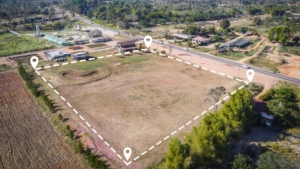
Land loans give buyers a way to purchase a lot today and build on it whenever the timing is right. Instead of financing a finished house, you finance the ground itself, which means the qualification process, rates, and terms all work a little differently than a standard mortgage. This guide covers what a land loan is, how land loans work, what to expect on rates and down payments, and the steps to get a loan to buy land. Whether you found the perfect parcel or you are still researching, you will leave knowing exactly how to finance it.
What Is a Land Loan?
What is a land loan? It is financing used to purchase a parcel of land rather than a home. Because there is no house serving as collateral, the land itself backs the loan. Lenders view land as riskier collateral than a finished home, so this type of financing typically comes with shorter terms, larger down payments, and somewhat higher rates than traditional mortgages.
People use land loans for all kinds of reasons. Some want to claim a buildable lot in a desirable area before prices climb. Others are investors planning a future one to four unit build. Still others inherit or already own land and want to refinance it on better terms.
The common thread is timing. Land loans separate the purchase of the lot from the construction of the home, so you are never forced to break ground before your plans and budget are ready. Demand for buildable lots tends to track new construction activity, which the U.S. Census Bureau measures monthly through housing starts and permits.
How Do Land Loans Work?
How do land loans work compared to a mortgage? The mechanics are familiar: you apply, the lender reviews your credit and income, the property is appraised, and you close with a down payment. The differences show up in the details.
First, the appraisal focuses on the land. The appraiser evaluates zoning, access, lot size, topography, and what comparable parcels have sold for. Lenders want confirmation that the lot is genuinely buildable and that its highest and best use is residential.
Second, terms are shorter. While a standard mortgage runs 15 to 30 years, most land loans run 5 to 15 years. Some lenders structure them with balloon payments, where a large balance comes due at the end of the term. Others, including the program available through JVM Lending, offer a fully fixed payment for the entire term with no balloon and no prepayment penalty.
Third, the exit strategy matters. Most borrowers do not hold a land loan to maturity. The typical path is to refinance into a construction loan when you are ready to build, then into a permanent mortgage once the home is complete. A loan with no prepayment penalty makes that transition seamless.
What Happens When You Are Ready to Build
When construction plans firm up, the land loan gets paid off through new financing. Lenders generally treat the payoff like any other refinance, and because the lot was already appraised and vetted at purchase, the land side of the file is usually clean. A construction loan covers the build itself, disbursing funds in stages as work is completed. Once the home is finished, that loan converts or refinances into a regular mortgage. Buying the lot first simply lets you lock in the land at today’s price and start that process on your own schedule.
Closing costs on a lot purchase look similar to a home purchase, with a few differences. You will still pay for an appraisal, title insurance, and recording fees. You generally will not need homeowners or flood insurance on vacant ground, which trims the escrow side of the closing statement. A survey is more common on land than on homes, especially for larger or irregular parcels, so budget for one if the seller cannot provide a recent version.
Types of Land Loans
Not all parcels are created equal, and lenders price land loans according to how development-ready the lot is. The more work a property needs before a home can go up, the more risk the lender takes on, and that risk shows up in down payment requirements and pricing. Three categories cover most situations, and knowing which one your target lot falls into will tell you a lot about how the financing conversation will go.
Raw Land Loans
Raw land has no improvements at all: no utilities, no road access, no grading. It is the hardest type of land to finance because it carries the most uncertainty. Lenders that do finance raw parcels usually require the largest down payments, sometimes 35 to 50 percent, along with a clear explanation of your plans for the property.
Unimproved Land Loans
Unimproved land sits in the middle. It may have some access or partial utilities nearby but lacks full hookups. Financing is easier to obtain than for raw land but still stricter than for a finished lot. Expect down payments in the 25 to 35 percent range from many lenders.
Improved Land and Lot Loans
Improved land, often called a finished lot, has road access and utilities available at the property line. This is the most financeable category and the one most relevant to future homebuilders. Lot loans on improved residential land generally offer the lowest down payments and the best pricing of the three types. Residential lots up to a few acres in established areas fit squarely in this category.
Land Loan Rates and Down Payments
Two numbers shape most land purchase decisions: the interest rate and the cash required at closing.
Why Land Loan Rates Run Higher
Land loan rates sit above standard mortgage rates because vacant land is riskier collateral. There is no home generating shelter value, land is less liquid if the lender ever has to sell it, and borrowers historically walk away from land more readily than from a home they live in.
A higher rate is not automatically a problem, though. What matters is whether the monthly payment fits comfortably in your budget and your plans. Balances on lot purchases are often modest relative to home prices, so the payment can be very manageable even at a higher rate. Many borrowers also refinance into lower-rate construction or permanent financing once they build, which limits how long the higher rate is in effect.
What Affects Your Land Loan Rate
Pricing on land loans follows the same logic as mortgage pricing, with a few extra variables. The condition of the lot matters most: a finished residential lot prices better than raw acreage, and residential zoning prices better than agricultural or recreational designations. Your credit score, down payment size, and loan amount all factor in as well, just as they do on a home loan.
Location plays a role too. Lenders are most comfortable with parcels in established residential areas with documented comparable sales. A remote lot with few recent sales nearby is harder to appraise, and that uncertainty can show up in pricing or in a declined file. If you are weighing two similar lots, the one closer to existing development will almost always be easier and cheaper to finance.
Down Payment Expectations
Down payment requirements vary by lot type and lender. As a general rule, plan on at least 20 percent for an improved residential lot, with raw and unimproved land requiring more. A larger down payment can also reduce how much you need in reserves. On JVM’s program, for example, putting half or more down can eliminate the reserve requirement entirely, while the minimum 20 percent down calls for about six months of payments in savings.
How to Get a Loan to Buy Land
Getting a loan to buy land follows a clear sequence. Here is how to move from lot hunting to closing.
- Confirm the lot is financeable. Check zoning, legal access, and acreage before you write an offer. Landlocked parcels, leased land, and commercial or industrial property fall outside most residential lot financing programs.
- Get your finances ready. Pull your credit, document your income, and total your liquid assets for the down payment and reserves.
- Talk to a lender early. Land loans are a specialty, and confirming your budget before you start touring lots prevents wasted offers.
- Make your offer with financing terms in mind. Build in time for the appraisal, which can take longer on land than on homes.
- Complete underwriting and close. The lender verifies your qualifications, reviews the appraisal, and funds the purchase.
What Lenders Look For
Approval on land loans generally comes down to four things: credit score, down payment, debt-to-income ratio, and the lot itself. Strong credit and a debt load below roughly 43 percent of income put you in a good position with most programs. The lot needs residential zoning, or an appraisal showing residential use as its highest and best use, plus legal access and a size within program limits.
One more note: income generated by the land, such as grazing fees or crop leases, usually cannot be counted toward qualification. Your personal income carries the application.
Smart Due Diligence Before You Buy Land
The biggest land-buying mistakes happen before financing ever enters the picture. A lot that looks perfect from the road can hide expensive surprises, so build these checks into your offer period.
Start with utilities. Confirm how far water, sewer, electricity, and internet are from the property line, and get real quotes for bringing them in. Connection costs can run from a few thousand dollars to well into six figures for remote parcels. If municipal sewer is not available, the lot will need a septic system, which means a percolation test to confirm the soil drains properly. A failed perc test can make a lot unbuildable, so make any offer contingent on passing one.
Next, verify access and boundaries. Legal access means a recorded right to reach the property from a public road, not just a dirt path the neighbors have always used. A current survey confirms the boundaries match what you think you are buying and reveals easements that could limit where you can build.
Finally, check the rules. Zoning determines what you can build, setback requirements determine where, and some areas add design review, minimum square footage, or HOA restrictions on top. A quick conversation with the local planning department before you close costs nothing and can save you from owning a parcel that will not support your plans. Lenders check many of these items during underwriting, but they are protecting the loan, not your building goals. Do your own homework.
JVM Lending’s 10-Year Land Loan Program
For buyers purchasing investment land, JVM Lending offers a dedicated program with a structure that removes the two biggest pain points of traditional land loans: balloon payments and prepayment penalties.
| FEATURE | DETAILS |
|---|---|
| Loan term | 10-year fixed, same payment the entire term |
| Loan amounts | $50,000 to $500,000 |
| Down payment | As little as 20% |
| Credit score | 680 minimum |
| Debt-to-income | Up to 43% |
| Property use | Investment land only (no owner-occupied builds) |
| Property type | Vacant residential lot, up to 20 acres |
| Zoning | Residential 1-4 units, or residential highest and best use per appraisal |
| Reserves | 0 to 6 months of payments, based on down payment |
| Prepayment penalty | None |
| Available states | AZ, CA, FL, GA, ID, IL, LA, MA, OR, TN, TX |
The program works for purchases and for refinancing a lot you already own. Land zoned for homes gets the best pricing, while parcels like farmland or recreational land can still qualify at a slightly higher rate. Property taxes are paid through an escrow account, which is required on this program.
Because the loan is for investment property, it suits buyers planning a future one to four unit build to sell or rent. If you are planning to build a primary residence, the financing options below are often the better path.
Land Loans vs. Other Financing Options
Financing the land directly is one of several ways to fund a lot purchase. The right tool depends on your timeline and what you already own.
| OPTION | BEST FOR | HOW IT WORKS |
|---|---|---|
| Land loans | Buying a lot now, building later | The land backs the loan; refinance when you build |
| Construction loan | Building right away | Funds the build in stages, then converts to a mortgage |
| Cash-out refinance | Homeowners with equity | Borrow against your current home, often at a lower rate |
| HELOC or home equity loan | Homeowners who want flexibility | Tap equity while keeping your existing mortgage in place |
Homeowners frequently overlook the last two. If you have meaningful equity in your current home, a cash-out refinance or home equity line of credit can fund a land purchase at home-loan pricing, and the purchase itself can then be made in cash. That route also works for owner-occupied build plans that fall outside investment-only land programs.
There is no single right answer here. Buyers with little home equity but strong savings tend to land on land loans or a construction loan. Established homeowners with substantial equity often find that tapping it is the cheapest source of funds. A short conversation with a lender who offers all of these options can map the math for your specific situation in a few minutes.
Land Loan FAQs
What is a land loan and how does it work?
A land loan finances the purchase of a parcel of land rather than a finished home. The land itself serves as collateral. You qualify based on credit, income, and down payment, and the lot is appraised for buildability and residential use. Most borrowers later refinance into construction or permanent financing when they are ready to build.
How much is the down payment on a land loan?
Plan on at least 20 percent down for an improved residential lot. Raw and unimproved land typically requires 25 to 50 percent depending on the lender and the condition of the parcel. Larger down payments can also reduce or eliminate reserve requirements.
Are land loan rates higher than mortgage rates?
Yes. Vacant land is riskier collateral than a finished home, so rates on land loans run higher than standard mortgage rates. A higher rate is not necessarily a deal breaker if the monthly payment fits your budget, and many borrowers refinance into lower-rate financing once construction begins.
Can you get a 30-year land loan?
Thirty-year terms are rare for land loans. Most run 5 to 15 years, and some carry balloon payments. JVM Lending’s program is a 10-year fixed loan with no balloon and no prepayment penalty, so the payment stays the same until you pay it off or refinance.
What states does JVM Lending offer land loans in?
JVM Lending’s land loans are available for lots located in Arizona, California, Florida, Georgia, Idaho, Illinois, Louisiana, Massachusetts, Oregon, Tennessee, and Texas. The program covers loan amounts from $50,000 to $500,000 on vacant residential lots up to 20 acres.
Secure the Lot Now, Build When You Are Ready
The hardest part of building is often finding the right piece of ground, and good lots rarely wait around. Land loans let you claim the parcel at today’s price and start construction on your own timeline, with a clear path to refinance once you build.
Reach out to JVM Lending for a free consultation and find out what your land purchase could look like.