

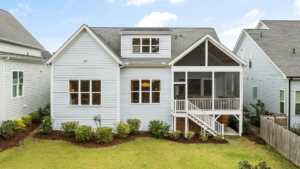
If you’re buying a home in Danville or San Ramon, there’s a good chance your mortgage will be a jumbo loan. With median home prices around $1.7 million in Danville and $1.2 million to $1.45 million in San Ramon, most single-family purchases in the Tri-Valley exceed the conforming loan limits that apply to standard mortgages.
That’s not a problem. It just means you need to understand how jumbo financing works, what it takes to qualify, and where to find the best terms. This guide breaks down everything Tri-Valley homebuyers should know about jumbo loans in 2026.
What Is a Jumbo Loan?
A jumbo loan is any mortgage that exceeds the conforming loan limits set by the Federal Housing Finance Agency (FHFA). Conforming loans can be purchased by Fannie Mae and Freddie Mac, the government-sponsored enterprises that back most U.S. mortgages. Jumbo loans fall outside that system and are instead funded by private investors, banks, and credit unions.
Because jumbo loans carry more risk for the lender, they typically come with stricter qualification requirements. But they also come with some surprising advantages, especially for well-qualified buyers in high-cost markets like the East Bay.
2026 Loan Limits in Contra Costa County
Contra Costa County, which includes Danville, San Ramon, and the rest of the Tri-Valley, is classified as a high-cost area. Here’s how the 2026 conforming loan limits break down:
| Loan Category | 2026 Limit (1-Unit Property) |
|---|---|
| Low-Balance Conforming | $832,750 |
| High-Balance Conforming | $1,249,125 |
| Jumbo (above high-balance) | $1,249,126+ |
Loans between $832,750 and $1,249,125 are called high-balance conforming loans. They’re still backed by Fannie Mae or Freddie Mac, but they carry slightly higher rates and tighter guidelines than standard conforming loans. Anything above $1,249,125 is a jumbo.
Why Most Danville and San Ramon Buyers Need Jumbo Financing
The math speaks for itself. Here’s how the numbers look for a typical purchase in each city:
| Scenario | Danville | San Ramon |
|---|---|---|
| Median Home Price | ~$1,700,000 | ~$1,300,000 |
| 20% Down Payment | $340,000 | $260,000 |
| Loan Amount | $1,360,000 | $1,040,000 |
| Loan Type | Jumbo | High-Balance Conforming |
A median-priced Danville home with 20% down requires a $1.36 million mortgage, which is well into jumbo territory. In San Ramon, a median purchase at $1.3 million with 20% down lands at $1.04 million, which falls into high-balance conforming. But single-family homes in neighborhoods like Gale Ranch, the Bridges, and Windemere often sell above $1.5 million, pushing those purchases into jumbo range as well.
Buyers putting down less than 20% will cross into jumbo territory at even lower purchase prices. A 10% down payment on a $1.4 million San Ramon home, for example, creates a $1.26 million loan, just above the conforming ceiling.
Jumbo Loan Rates: Better Than You Might Expect
One of the most common misconceptions about jumbo loans is that they always carry higher interest rates. That’s not necessarily true. In fact, jumbo rates can sometimes match or even come in below conforming rates for well-qualified borrowers.
Here’s why:
- No guarantee fees. Fannie Mae and Freddie Mac charge guarantee fees (G-fees) on every conforming loan, and those fees get baked into the rate. Jumbo loans bypass this entirely because they’re funded by private investors.
- Lower risk borrowers. Jumbo qualification standards are stricter, which means jumbo borrowers tend to have higher credit scores, larger down payments, and more reserves. From the investor’s perspective, that’s a safer loan.
- Portfolio lender competition. Banks and credit unions that hold jumbo loans on their balance sheets sometimes price aggressively to attract high-net-worth clients and build long-term relationships.
As of early 2026, the spread between jumbo and conforming rates has narrowed to roughly 0.25% to 0.30% nationally. For some borrowers with excellent credit and significant assets, that gap disappears entirely. The key is working with a lender that has access to multiple jumbo investors, because pricing varies significantly from one investor to the next.
Jumbo Loan Requirements: What It Takes to Qualify
Jumbo loans have stricter qualification guidelines than conforming loans. Here’s what most programs require:
Credit Score
Most jumbo programs require a minimum credit score of 700, with the best rates available at 720 and above. Some programs allow scores as low as 680, but with higher rates, larger down payment requirements, or stricter reserve guidelines. If your score is below 700, conventional conforming or FHA financing may be a better fit, as long as the loan amount stays within conforming limits.
Down Payment
The standard down payment for jumbo financing is 20%, and the most competitive rates often require 25% down. However, there are programs that allow 10% down with a single mortgage and as little as 5% down through combination loan structures (a conforming first mortgage paired with a second mortgage to cover the gap). These low-down-payment jumbo options have specific loan amount caps and require strong credit and income profiles.
Debt-to-Income Ratio
Jumbo lenders generally want to see a DTI ratio below 43%, and some of the most competitive programs cap it at 36%. Your DTI includes all monthly debt obligations (car payments, student loans, credit cards) plus the proposed mortgage payment, divided by gross monthly income.
Reserves
This is where jumbo loans differ the most from conforming loans. Many jumbo programs require 6 to 12 months of housing payments (principal, interest, taxes, insurance, and HOA dues) available as liquid reserves after closing. Some programs also require reserves for other properties you own. Reserves typically need to be in checking, savings, or brokerage accounts, though some investors will count retirement accounts at a discounted value.
Documentation
Expect a thorough review of income, assets, and employment. Two years of tax returns, recent pay stubs, bank statements, and investment account statements are standard. Self-employed borrowers may face additional documentation requirements, including profit and loss statements and business tax returns.
Jumbo vs. Conforming vs. High-Balance: Which Do You Need?
The right loan type depends on your purchase price, down payment, and financial profile. Here’s a quick comparison:
| Feature | Conforming | High-Balance | Jumbo |
|---|---|---|---|
| Max Loan (2026) | $832,750 | $1,249,125 | No cap |
| Min Down Payment | 3-5% | 5% | 5-20%+ |
| Min Credit Score | 620 | 660-680 | 680-720 |
| Reserve Requirement | Minimal | 2-6 months | 6-12 months |
| Backed By | Fannie/Freddie | Fannie/Freddie | Private investors |
| G-Fees | Yes | Yes (higher) | No |
For San Ramon buyers whose loan amount falls between $832,750 and $1,249,125, high-balance conforming may be the sweet spot: easier qualification than jumbo, with Fannie/Freddie backing. For Danville buyers or anyone purchasing above $1.56 million (with 20% down), jumbo is likely the only path.
One important note: a higher rate isn’t automatically a worse deal. If a jumbo loan with a slightly higher rate allows you to put less money down and keep more cash in reserves, that can actually lower your effective monthly cost and preserve financial flexibility. It’s worth running the numbers both ways.
Low-Down-Payment Jumbo Options
Putting 20% down on a $1.7 million Danville home means writing a check for $340,000. That’s a significant amount of capital, even for high-income households. The good news is that there are alternatives.
Combination loans (sometimes called piggyback loans) pair a conforming or high-balance first mortgage with a second mortgage to cover the gap. This structure lets you access jumbo-level purchasing power with as little as 5% to 10% down, often without private mortgage insurance (PMI). The second mortgage typically carries a variable rate tied to Prime, so you’ll want to understand how that rate could adjust over time.
Single-mortgage jumbo programs at 10% down are also available, though they come with higher credit score requirements (typically 720+) and more stringent reserve guidelines. The trade-off is simplicity: one loan, one payment, one closing.
Either way, these programs have specific loan amount caps. A lender with access to multiple jumbo investors can help you find the best combination for your purchase price and financial situation.
Jumbo ARMs: A Strategy Worth Considering
Most buyers default to a 30-year fixed mortgage, and for good reason: it’s predictable. But for Tri-Valley buyers taking on jumbo-sized loans, an adjustable-rate mortgage (ARM) can be a smart alternative, especially if you plan to sell, refinance, or pay down your balance within the first 5 to 10 years.
A jumbo ARM starts with a fixed rate for an initial period (typically 5, 7, or 10 years), then adjusts annually based on a market index. The initial fixed rate on an ARM is almost always lower than the rate on a comparable 30-year fixed loan. On a $1.3 million jumbo mortgage, even a 0.5% rate difference translates to roughly $400 per month in savings during the fixed period.
Here’s when a jumbo ARM tends to make sense:
- You expect to move within 5 to 10 years. Many Tri-Valley buyers purchase with a timeline in mind, whether that’s upsizing as a family grows or relocating for work. If you’ll sell before the rate adjusts, you capture the savings without the risk.
- You plan to refinance. If rates drop in the next few years, you can lock in a lower fixed rate later. In the meantime, the ARM keeps your payment lower.
- You want to maximize cash flow now. The monthly savings from a lower ARM rate can be redirected toward investments, home improvements, or simply a more comfortable budget.
ARMs do carry risk. If you’re still in the home when the rate adjusts, your payment could increase. Every ARM has caps that limit how much the rate can move per adjustment and over the life of the loan, so the exposure isn’t unlimited, but it’s real. The key is going in with a plan and understanding the adjustment structure before you commit.
How Jumbo Lending Works Behind the Scenes
Unlike conforming loans, where guidelines are standardized by Fannie Mae and Freddie Mac, jumbo loans are underwritten to the specific requirements of the investor who will purchase the loan after closing. Different investors have different thresholds for credit scores, reserves, DTI, down payment, and even the number of active tradelines on a credit report.
This means two things for buyers:
- Not all jumbo lenders are created equal. A lender with access to one or two jumbo investors has far fewer options than one with access to ten or more. More investors means more flexibility to match your specific financial profile to the best available terms.
- Pre-approval matters more with jumbo. Because guidelines vary so much between investors, getting pre-approved by a lender who has already identified which investor you qualify for gives you a significant advantage in the competitive Tri-Valley market.
Appraisals also get more scrutiny with jumbo loans. Appraisal waivers, which are common on conforming loans, are virtually nonexistent in jumbo. Most jumbo appraisals are subject to desk reviews or second opinions, which can add time to the process. Working with a lender who manages appraisals proactively helps avoid last-minute surprises.
Frequently Asked Questions
What is the jumbo loan limit in Contra Costa County for 2026?
Any mortgage above $1,249,125 for a single-family home is classified as a jumbo loan. Loans between $832,750 and $1,249,125 are high-balance conforming.
Do I need a jumbo loan to buy a home in Danville?
Most likely, yes. The median home price in Danville is approximately $1.7 million to $1.9 million. Even with 20% down, a typical purchase requires a mortgage well above the conforming limit.
Can I put less than 20% down on a jumbo loan?
Yes. Some lenders offer jumbo financing with as little as 5% to 10% down through combination loan structures, though qualification requirements are stricter and rates may be slightly higher.
Are jumbo loan rates higher than conforming rates?
Not always. For well-qualified borrowers with strong credit, large down payments, and significant reserves, jumbo rates can match or even beat conforming rates. The absence of guarantee fees is a key factor.
What credit score do I need for a jumbo loan?
Most programs require 700+, with the best rates at 720+. Some programs allow 680, but with tighter guidelines and higher rates.
The Bottom Line for Tri-Valley Buyers
Jumbo financing is the norm in Danville and San Ramon, not the exception. The good news is that today’s jumbo market offers more flexibility than most buyers expect, from low-down-payment options and ARM strategies to rates that can rival conforming loans for qualified borrowers. The key is working with a lender who has deep access to multiple jumbo investors and knows how to match your profile to the best available terms.
Ready to explore your options? Contact JVM Lending today for a free rate quote.