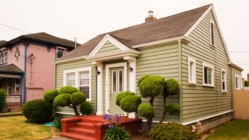


If you’re buying a place for weekends and holidays, you may have noticed that financing rules are a little stricter than for a primary residence.
Conventional second home mortgages require at least 10% down and at least two months of reserves in your bank accounts. It’s also worth noting that second homes must be a one-unit property (no duplexes, triplexes, etc.), and must be occupied for part of the year – not rented out full time.
Fannie Mae/Freddie Mac set these minimum second home mortgage requirements, but keep in mind that individual lenders can also add stricter rules on top of them (“overlays”).
Key Takeaways
- Second homes require a 10% minimum down payment. Conventional loans cap a second home purchase at 90% loan-to-value, so a 10% down payment is the absolute minimum
- Two Months’ Reserves. You need to keep at least 2 months of mortgage payments in your bank account. Additional reserves apply for more properties owned.
- Down payment heavily affects the rate on a second home loan. All loans have loan-level pricing adjustments (i.e., “hits” that affect the rate for better or worse) for things like credit scores, property type, property use, and down payment. The adjustments for different down payment tiers tend to be far more significant on a second home than a primary. Translation: The spread between rates at 10% vs 25% for a second home is likely far more significant than on a primary residence.
- No FHA or VA. FHA and VA loans cannot be used for a vacation or second home, which leaves conventional and jumbo financing as the typical paths.
- No rental income to qualify. You can rent out the property for part of the year, but you may not use rental income to qualify for a second home loan.
What Makes a Property a Second Home?
A property counts as a second home when you use it yourself for part of the year, and it meets a few standards underwriters check, most of which are set by Fannie Mae and Freddie Mac:
- You occupy it for some portion of the year. There’s no minimum number of nights, but the intent has to be genuine personal use (not full-time rental).
- It’s a one-unit dwelling. You can’t finance a duplex or triplex as a second home, regardless of how you plan to use it.
- It’s suitable for year-round occupancy. A cabin with no heat or no winter road access can fail this one even if you only visit in July.
- You have exclusive control over the property. No agreement can hand a management company firm control and authority over who stays there and when. This is the test that rules out timeshares, along with rental-pool condos where a management agreement controls who stays.
- “Reasonable location” (no distance rule). You will often hear that a second home needs to be “50 miles from your primary residence.” Many lenders adopt that stance as an overlay, but technically Fannie Mae/Freddie Mac does not have a specific minimum mileage requirement between your primary residence and second home. That said, underwriters will check that the property is located in a “reasonable Location for second home use“ (such as a recognized vacation/resort area or an urban location used to minimize commuting)
How Your Down Payment Affects the Rate and Points on Your Second Home Loan
As mentioned above, your down payment strongly affects the rate you get, the points you pay, or both.
Every conventional second home loan comes with a loan-level price adjustment. Lenders add this extra charge because the property is a second home rather than your primary residence. It’s a percentage of the loan amount, and the percentage depends on your loan-to-value, which is simply your loan as a percentage of the purchase price. If you put 20% down, your loan-to-value is 80%.
You can pay the adjustment one time at closing as “points” (1 point equals 1% of your loan amount), or you can take a slightly higher interest rate with the cost built in. As a rough guide, each point works out to about 0.125% to 0.25% on your rate, depending on the lender and the market. From the Fannie Mae matrix effective September 9, 2026:
| Loan-to-value | Down payment | Second home price adjustment |
|---|---|---|
| 60.01% to 70.00% | 30% or more | 1.625% |
| 70.01% to 75.00% | 25% | 2.125% |
| 75.01% to 80.00% | 20% | 3.375% |
| 80.01% to 90.00% | 10% to 20% | 4.125% |
The steps aren’t evenly spaced. The biggest drop comes between 20% and 25% down, which is why a slightly larger down payment can sometimes be worthwhile. On a $600,000 second home:
- 10% down. $60,000 down, a $540,000 loan, and a 4.125% adjustment of $22,275.
- 20% down. $120,000 down, a $480,000 loan, and a 3.375% adjustment of $16,200.
- 25% down. $150,000 down, a $450,000 loan, and a 2.125% adjustment of $9,562.
Going from 20% to 25% down takes $30,000 more cash, but it also cuts the price adjustment by $6,638. So at the same interest rate, that extra 5% down really only costs you about $23,400 out of pocket, not the full $30,000.
That said, keeping that money in your account in exchange for a slightly higher rate isn’t automatically a bad choice. It’s worth weighing against your own priorities and goals.
The bottom line: On a second home, getting to 25% down can save you a lot in rate and fees.
What Credit Score Do You Need to Qualify for a Second Home Mortgage?
620 is the bare minimum credit score for a conventional second home loan. That said, many lenders do have additional overlays on top of this.
Your score also affects the interest rates, points, and mortgage insurance amounts you’ll be offered.
How Much You Need in Reserves
Conventional second home loans require two months of reserves, meaning two months of the new property’s full payment in verified assets after closing. If the monthly payment is about $4,564 a month, minimum reserves come to about $9,130.
If you already own financed property aside from your primary residence, there’s a second layer. You will also need reserves equal to 2% of the combined unpaid balances on those other properties when you own one to four of them, rising to 4% at five or six.
Retirement accounts and gifted funds can count toward reserves under specific rules, so confirm what qualifies early.
Can You Use an FHA or VA Loan for a Second Home?
No. FHA insures principal residences, with narrow secondary-residence exceptions that a vacation property doesn’t meet. VA financing carries its own occupancy certification and works the same way.
That leaves a conventional loan within the county limit, or jumbo financing above it.
Conventional Loan Second Home Limits, and Where Jumbo Begins
If you cross the conventional loan limit for the county you’re looking in, you will need a jumbo loan. Jumbo loans have different guidelines and pricing. Jumbo second home programs commonly want a larger down payment, more reserves, and a higher credit score than the Fannie Mae/Freddie Mac minimums, and each investor sets its own underwriting rules
What Happens if You Rent Out Your Second Home
When you close on a second home loan, you sign a statement that you plan to use the home yourself for part of the year. That statement is about your plans on closing day. Renting it out for a few weekends here and there is fine, as covered above. And sometimes life changes. A job moves, a family situation shifts, and a home you bought for weekends ends up making more sense as a rental.
The real problem is applying for a second home loan when you already plan to run the place as a rental. An investment property loan requires a bigger down payment (at least 15% on a one-unit home, compared with 10% for a second home) and comes with higher price adjustments. Lenders know that, so underwriters look at the full picture: where the home is, how far it is from where you live, whether it’s set up for short-term rentals, and whether the numbers only work with rental income. If rental income is central to the purchase, finance it as an investment property from the start.
Second Home Mortgage FAQ
What are the requirements for a second home mortgage?
Second home mortgage requirements on a conventional loan are a maximum 90% loan-to-value, two months of reserves, a one-unit property suitable for year-round occupancy, and an Approve/Eligible finding from Desktop Underwriter. The property must be under your exclusive control and cannot be a full-time rental or a timeshare.
How much down payment do you need for a second home?
10% is the minimum on a conventional second home loan, because Fannie Mae caps second home purchases at 90% loan-to-value. Larger down payments reduce the loan-level price adjustment, improving rates and/or points.
Does a second home have to be 50 miles away?
No. Fannie Mae/Freddie Mac guidelines do not include a specific distance rule. That said, the location still needs to make sense for a second home (vacation area, a place near family, a big reduction in commute, etc.). Some individual lenders will also apply their own distance overlays.
Can you rent out a second home?
Yes, occasionally, as long as you don’t use the rental income to qualify for the loan and no management agreement controls who occupies the property. A second home rented out consistently or placed in a rental pool is an investment property and has to be financed as one.
How many months of reserves do you need for a second home?
Two months of the new property’s full payment. If you own other financed properties (aside from your Primary residence), you also need reserves equal to 2% of their combined unpaid balances with one to four properties, or 4% with five or six.
Can you use an FHA loan for a second home?
No. HUD’s definition of a Secondary Residence explicitly excludes a vacation home, so FHA financing isn’t available for a second home purchase. Conventional financing within the county loan limit, or jumbo financing above it, are the typical paths.
Ready to Plan Your Second Home Purchase?
Most second home mortgage requirements come straight from Fannie Mae’s rules, and will apply to any lender offering you a conventional loan.
The real difference is the strategy. Everyone’s goals and situation are different, and there’s no one-size-fits-all approach to financing a second home.
Here’s what working with JVM Lending looks like:
- We run your down payment options side by side. You’ll see how 10%, 20%, 25%, or more affects your rate, your fees, and how much cash you keep in the bank.
- We start with your priorities. Whether you care most about a lower monthly payment, keeping cash on hand, or paying less at closing, we’ll build the plan around what matters to you.
- We do the heavy lifting up front. We review your reserves, the property, and the fine print early, so there are fewer surprises once you’re under contract. From there, we get creative and strategic about how to structure your loan.
- We get hyper-local. Property taxes, HOA dues, and insurance can vary a lot from one vacation area to the next. We’ll estimate the real costs for the area you’re looking at and plan around them together.
Reach out for a pre-approval, and we’ll walk you through your options. Let’s get you that beach house!
Sources