
I. Rates fell again today, largely in response to falling oil prices.
If we get weak jobs reports this week, expect rates to fall even further.
Many pundits on X continue to call for much lower rates, including David Rosenberg, James Thorne, and Ed Dowd.
Let’s hope, because we’ve seen even small 1/4% drops in rates bring homebuyers back into the market in force.
II. I mentioned a few weeks ago that the Dems taking either the House or the Senate would be good for rates because it would entail gridlock (preventing more spending, no tax cuts, etc.) and the bond markets like that.
But when the Dems do likely take the House (and possibly the Senate) tomorrow, rates will not move much because the bond market expects it and has already “priced it in.”
So, the only result that might move the markets is a surprise GOP victory.
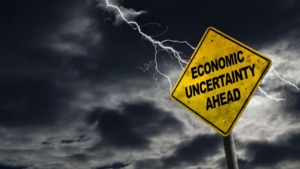
III. Nobody loves a good apocalypse more than me!
As a 30-year mortgage veteran, I can confidently say that nobody loves a good financial meltdown more than me. They bring down rates almost every time, often by a lot.
Examples:
- Asian Financial Crisis, Russian default, and LTCM collapse (1997–1998): The Fed cut from 5.5% to 4.75%, and the 10-Year Treasury plummeted as well.
- Dot-com bubble burst, 2001 recession, and 9/11 attacks (2000–2003): The collapse of tech stocks triggered a U.S. recession; the September 11 attacks added further shock. The Fed cut the Fed Funds rate aggressively from 6.5% to 1%.
- Global Financial Crisis (2007–2009): The subprime/housing crisis, credit crunch, and Lehman Brothers collapse produced the worst financial crisis since the 1930s. The Fed cut from 5.25% to a 0–0.25% range.
- COVID-19 pandemic (2020): Lockdowns and the sudden stop in economic activity caused the fastest descent into a recession in modern times. The Fed made emergency cuts totaling 1.5 percentage points in March 2020, taking the rate to 0–0.25%.
In late October, the U.K. government “encouraged” households to store enough food and water to last three days without electricity.
And that official government suggestion only encouraged all of the other apocalypse predictors (especially the firms selling apocalypse supplies 😊).
Here are some suggested reasons for concern:
- A cyber-attack on our electrical grid.
- A massive escalation of either the Iran or the Ukraine war.
- A terrorist attack on our electrical grid.
- Mass post-election riots.
And – my personal favorite: - A good old-fashioned financial meltdown caused by a massively over-inflated stock market and a ridiculously over-leveraged economy.
(Just search on X for financial crash, meltdown, or apocalypse and you’ll see all kinds of examples)
This is my reminder that crashes, apocalypses, and meltdowns, while scary, are often very good for rates!
This is also my reminder that the most predicted crises and calamities never materialize. It’s the unexpected crises we should worry about.
Here are a few dire predictions that never materialized:
- Global starvation (late 1960s)
- Running out of oil (1970s – 2000s)
- Ozone hole (1980s)
- Acid Rain (1980s)
- Nuclear Armageddon (1980s)
- Japan buying up America (1980s)
- Short-term impacts of global warming (1990s)
- Y2K (1990s)
- China overtaking the U.S. GDP by 2025 (2000s).
- QE causing hyperinflation (2010s)
- Yield curve inversion, spiking rates, banking crises, and huge recession by 2023
Then there were also the myriad housing price meltdown predictions we’ve seen since 2010, e.g. shadow inventory crushing the market, rates going up and crushing the market/prices (this one repeats often), boomers selling en masse and flooding the market, Airbnb liquidations, affordability crises, etc.
So, while it probably doesn’t hurt to keep a bit of extra cash on hand, along with some food, water, and batteries, I probably wouldn’t count on an apocalypse or a meltdown anytime soon.
BUT – if we do get one, look forward to lower rates!
Join 10,000+ readers for mortgage insights and tips.